Euclid finds its first new comet
C/2026 S1 turned up in galaxy-survey images; catalogues confirmed a first for the mission.
Article link
A first comet
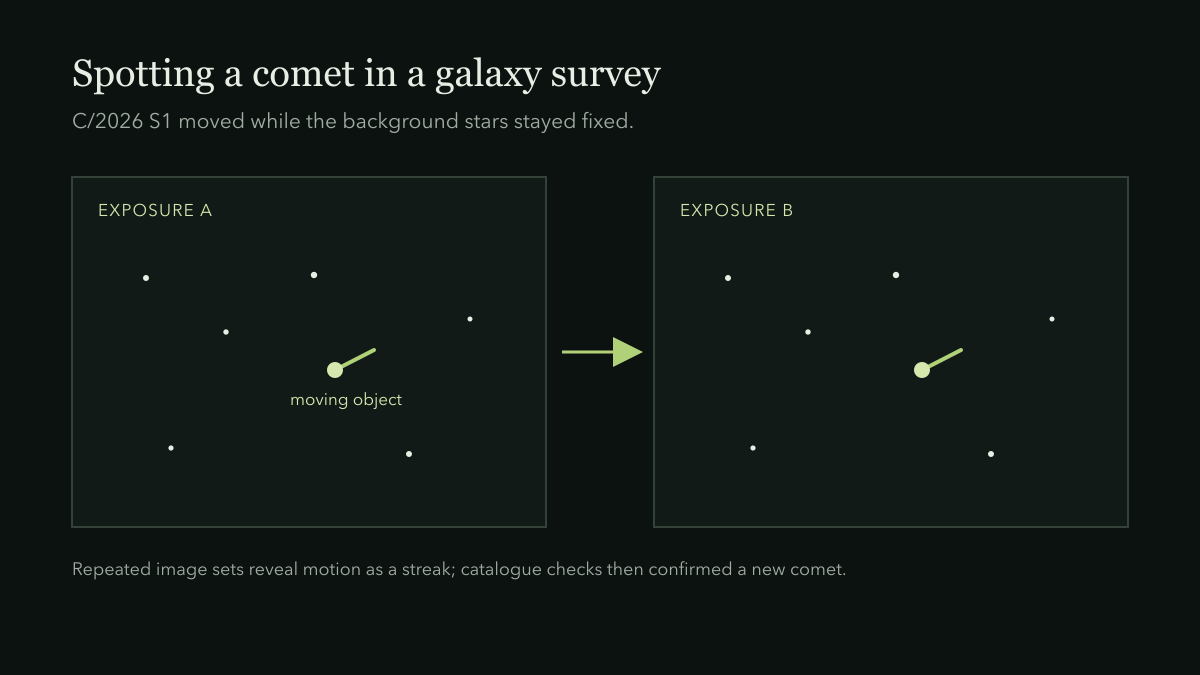
Between 16 and 24 September 2026, Euclid imaged C/2026 S1 in the Euclid Deep Field North. The telescope is designed to map distant galaxies; this object became its first previously unknown comet, after earlier detections of comets already known to astronomers.[1]
Reading the streak
Euclid holds background stars fixed during each exposure, so a moving object can cross the frame as a streak. University of Helsinki researcher Mikko Pöntinen built software to search Euclid images for that pattern. The faint cloud around the streak suggested an active comet. The team identified it in multiple image sets and combined those positions with ground-based follow-up observations to establish its motion and orbit.[2]
Detection, then confirmation
The team found no match in known-object catalogues and reported the observations to the International Astronomical Union's Minor Planet Center. The centre confirmed the comet on 8 October; ESA announced it on 19 October. This separates detection from confirmation: repeat positions and an outside catalogue check established that the object was new.[1]
A survey built for galaxies
Euclid's observing plan avoids regions dominated by Milky Way stars, interstellar material and zodiacal light, which can interfere with faint-galaxy measurements. Its wide survey covers more than a third of the sky, while its deep survey repeatedly observes three selected patches. Together, these observations will map galaxy distribution across cosmic history.[3]
Sources & further reading
- Euclid discovers new cometEuropean Space AgencyPublished October 19, 2026Accessed November 3, 2026
Dates, Deep Field North and new-comet confirmation.
- Meet Euclid's first comet discovery: C/2026 S1 (Euclid)Euclid ConsortiumPublished October 19, 2026Accessed November 3, 2026
Describes streak detection and follow-up.
- Euclid's wide and deep surveysEuropean Space AgencyPublished February 14, 2024Accessed November 3, 2026
Describes field selection and survey coverage.
Keep exploring
A radio signal traces comet MAPS before its breakup
Radio observations track April gas outbursts; the inferred mass loss depends on modelling assumptions.
Read story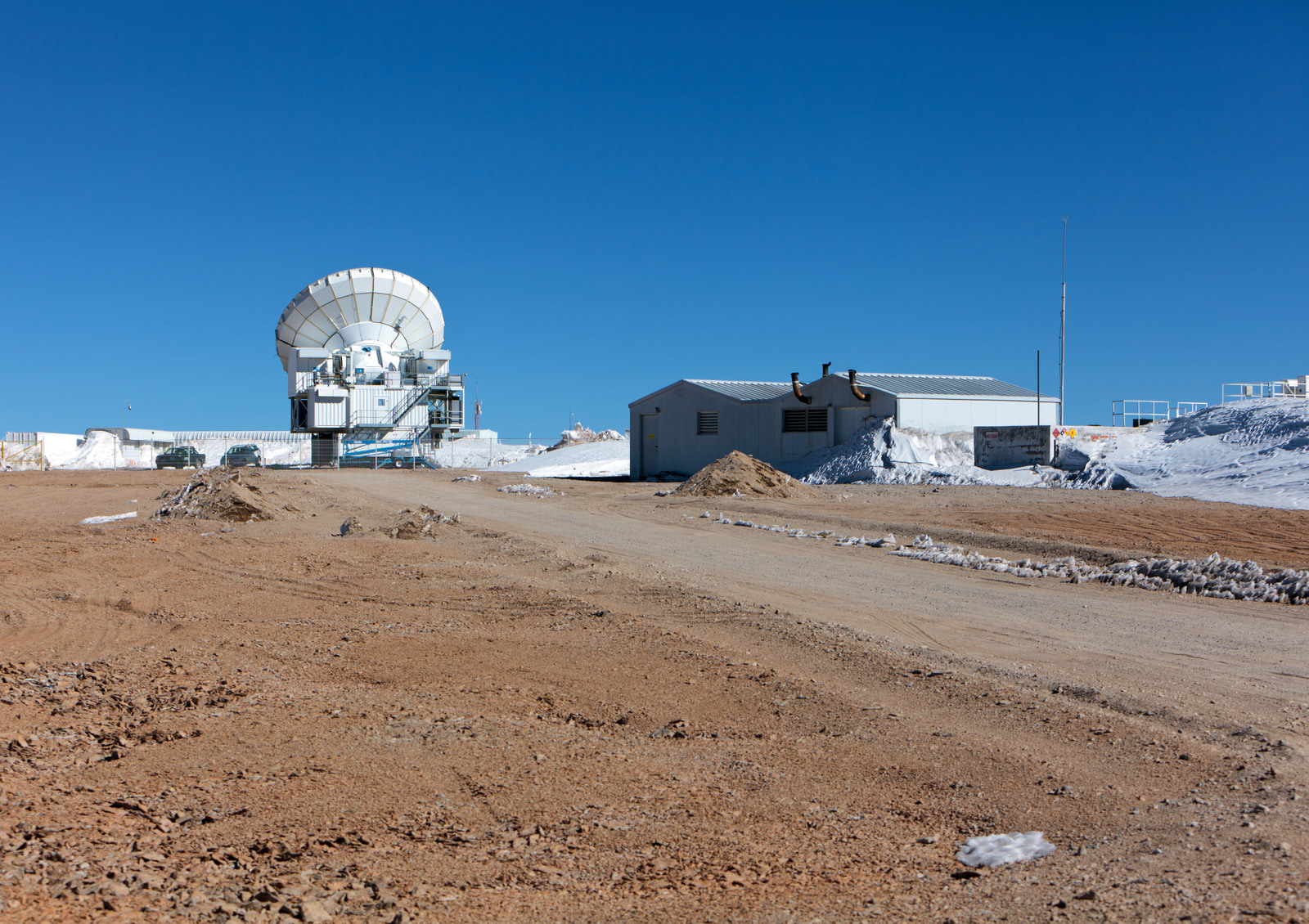
How ERMIS-3 held a laser link on target
An ERMIS-3 laser downlink tests tracking; AUTh reports 1 Gbps capability and link-budget potential up to 10 Gbps.
Read story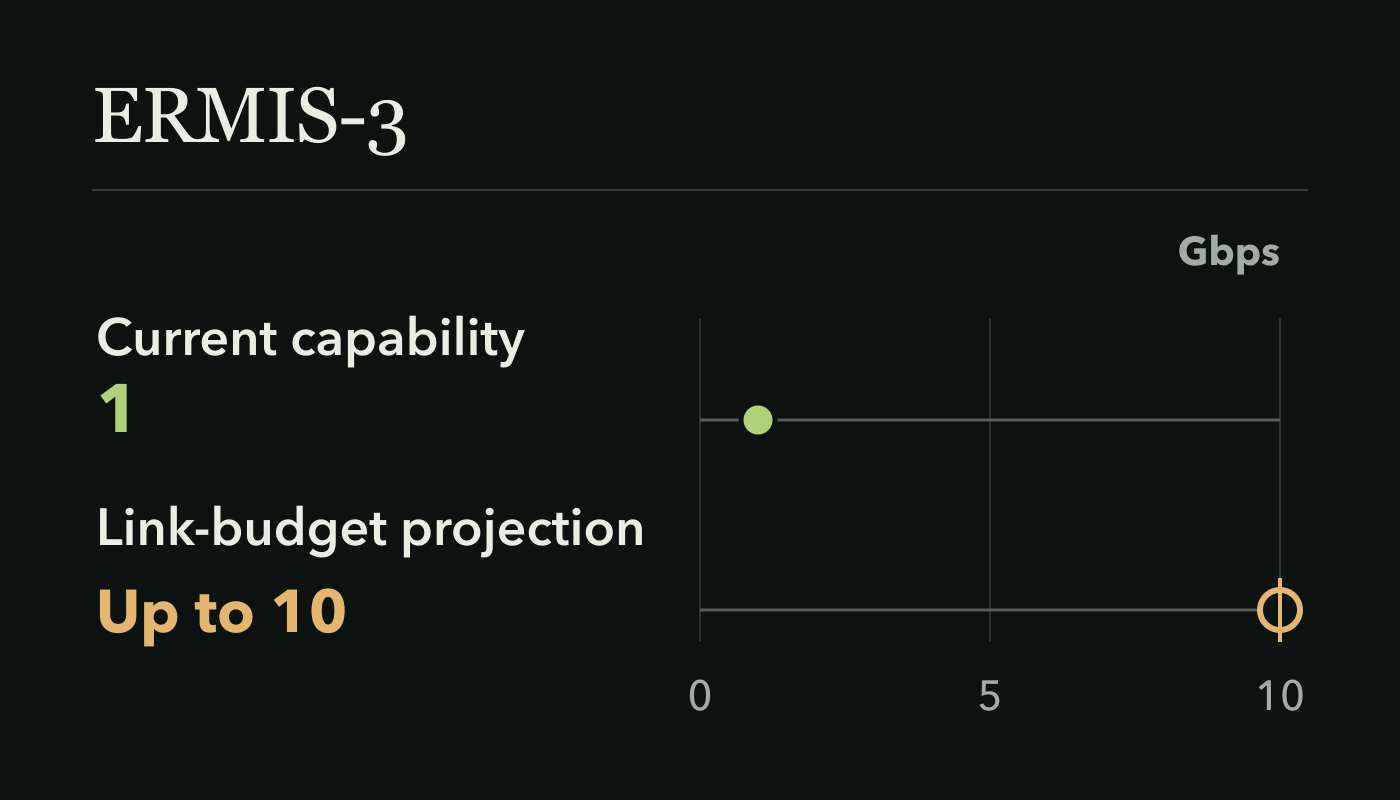
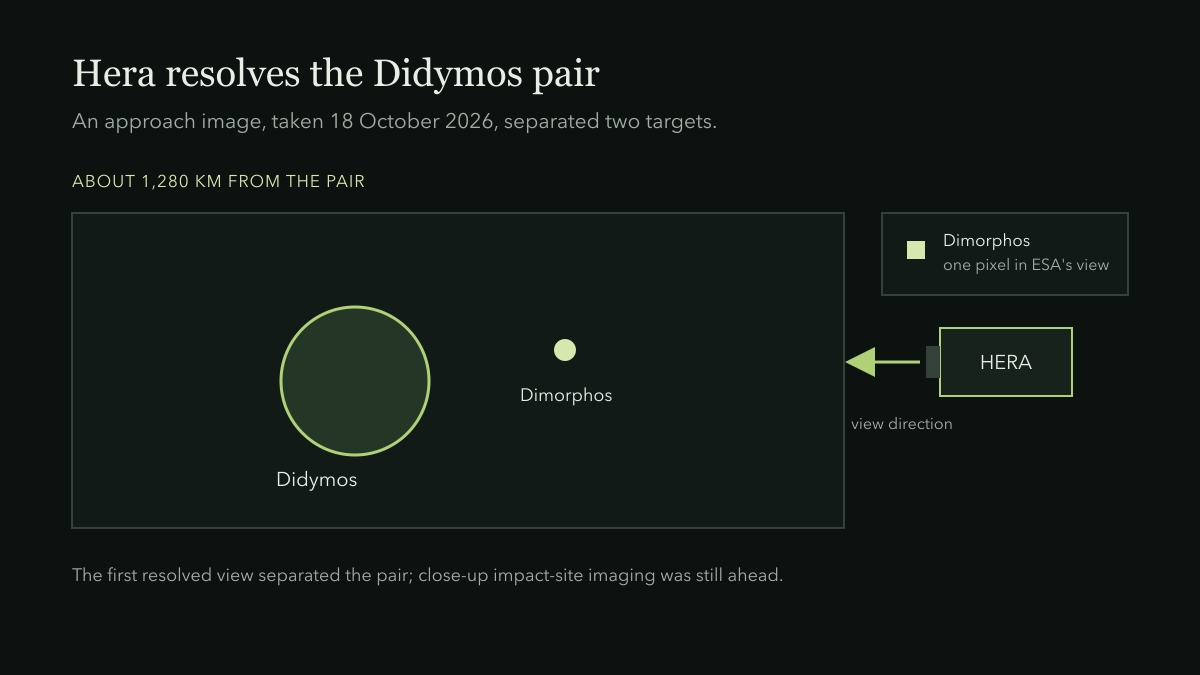
Hera resolves the pair it came to study
Hera's 18 October 2026 image separated Didymos and Dimorphos during its approach to the post-impact survey.
Read story