How ERMIS-3 held a laser link on target
An ERMIS-3 laser downlink tests tracking; AUTh reports 1 Gbps capability and link-budget potential up to 10 Gbps.
Article link
Point, acquire, track
ERMIS-3, an 8U CubeSat, established an optical downlink with Greece's Holomondas Optical Ground Station (HolOGS-1). ESA says the demonstration tested precise pointing, acquisition and tracking (PAT).[1]
A narrow laser beam must be aimed at the ground receiver, acquired and kept aligned while the satellite crosses a short pass. Its narrow footprint makes precise tracking essential. Clouds can block the path and turbulence can degrade the signal. Higher-rate optical links could help move large Earth-observation files, but the trial does not establish all-weather service.[1]
Rates and limits
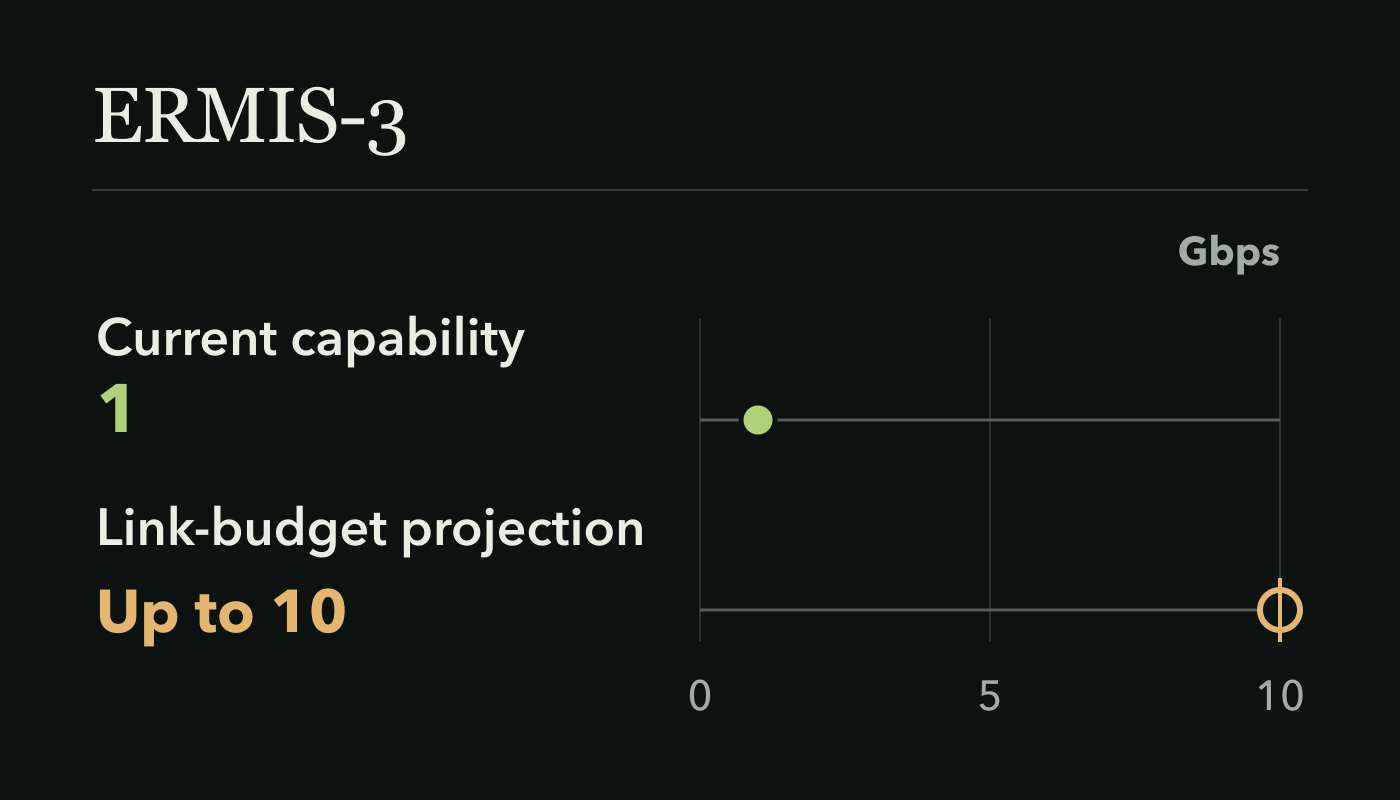
AUTh's 21 October release reports a current terminal capability of 1 Gbps. It says link-budget margin could support up to 10 Gbps; that upper figure is a projection, not a rate demonstrated in the reported test.[3]
ESA's programme account also describes up to 10 Gbps as link-budget headroom, not measured throughput. It reports that routine autonomous operation followed first contact within a week, reaching up to two scheduled links per day. That repeatable schedule goes beyond a single contact.[2]
First light is not dated
AUTh says the first contact took place on the first active pass; by the third pass, the systems were calibrated and running autonomously on a pre-scheduled plan. It gives no calendar date for first light.[3]
Sources & further reading
- CubeSat achieves challenging laser link to groundEuropean Space AgencyPublished November 2, 2026Accessed November 4, 2026
ESA's report explains the ERMIS-3 link, PAT test, narrow beam and weather limits.
- Greek optical communications demonstration: CubeSat ERMIS-3 makes high-performance space-to-ground linkEuropean Space AgencyPublished November 2, 2026Accessed November 4, 2026
ESA records first-pass contact, autonomous links and link-budget headroom.
- AUTh report on ERMIS-3 optical linkAristotle University of Thessaloniki (AUTh)Published October 21, 2026Accessed November 4, 2026
English descriptor for AUTh's Greek release on link capability and commissioning sequence.
Keep exploring
Hera resolves the pair it came to study
Hera's 18 October 2026 image separated Didymos and Dimorphos during its approach to the post-impact survey.
Read story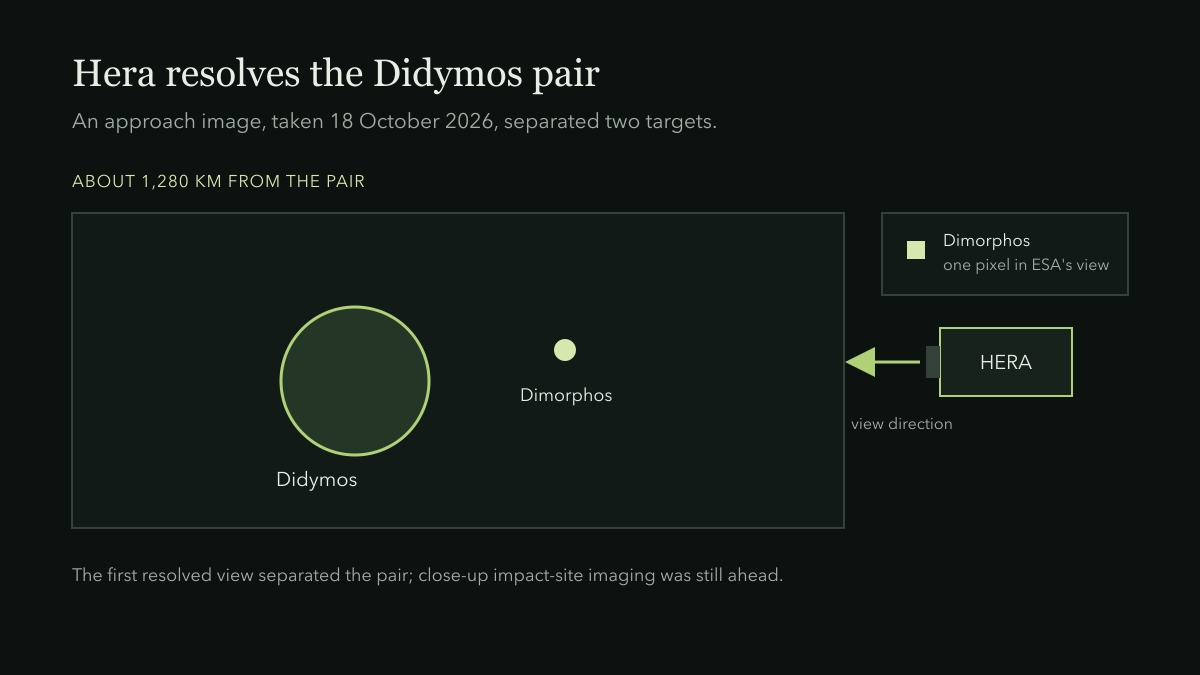
Juice's 2024 Moon-Earth assist
The double assist sent Juice toward Venus before later legs to Jupiter.
Read story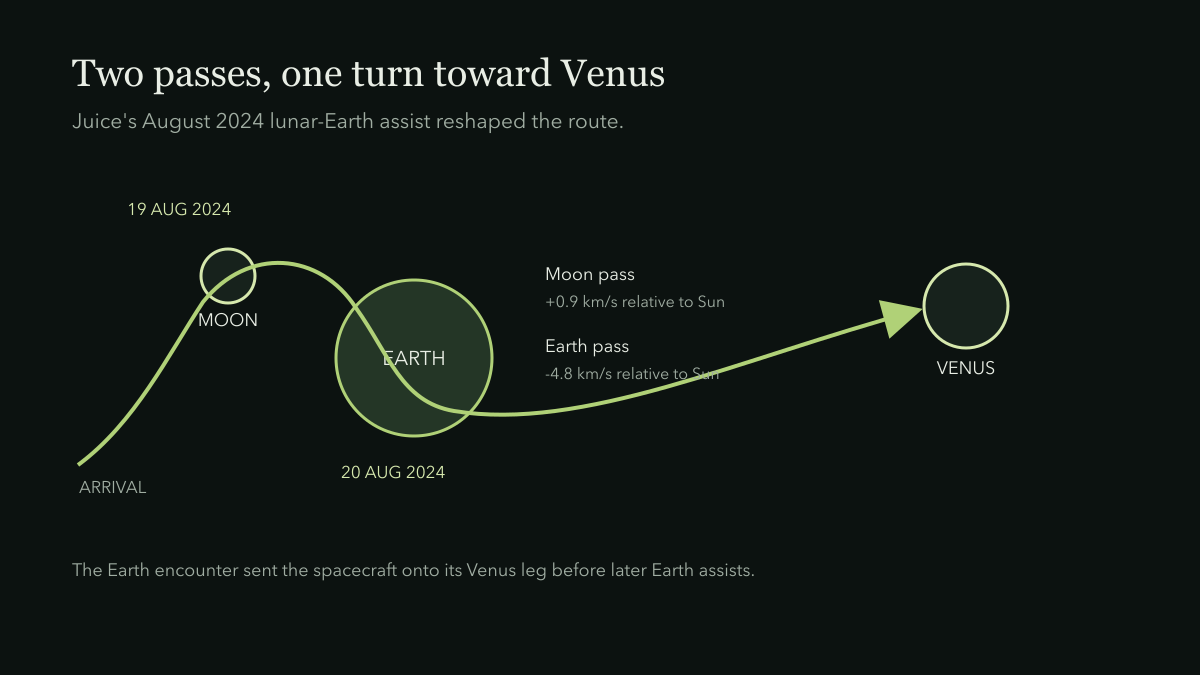
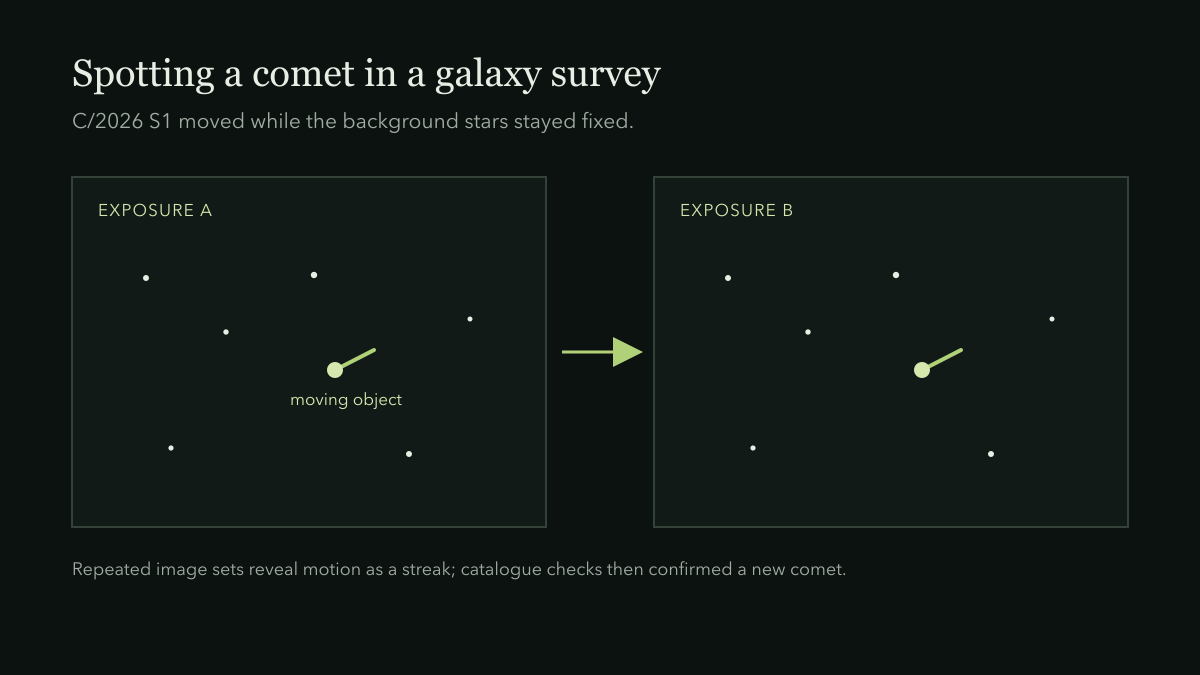
Euclid finds its first new comet
C/2026 S1 turned up in galaxy-survey images; catalogues confirmed a first for the mission.
Read story