Why a comet’s HCN cargo may not survive delivery
A model of early Earth’s comet bombardment separates carrying organic molecules from delivering a concentrated supply that survives an impact.
Article link
Cargo is only the beginning
A comet can contain molecules useful to prebiotic chemistry without delivering them in a useful form. A manuscript by Richard Anslow and colleagues tests that distinction for early Earth: high-speed impacts can destroy organic molecules, while successful delivery must provide a sufficiently concentrated supply.[1]
Its models connect comet populations, atmospheric entry and impact survival. Chemical abundance in a visitor is a starting point; the authors ask whether an impact can leave a concentrated, surviving supply at the surface.[1]
What counted as a successful delivery
Hydrogen cyanide (HCN) is used in experiments on chemistry preceding life. Across 100,000 simulated bombardment histories, 54% recorded no impact delivering at least 10 millimolar HCN onto exposed land; 46% had at least one. This was the chosen concentration criterion. The median was zero, not a historical measurement.[2]
The model focuses on short-period comets and adopts a 1-bar atmosphere, optimistic exposed land and dilution only in the comet’s water ice. These choices favor delivery rather than reconstruct known early-Earth conditions.[2]
Atmospheric entry preferentially filters out small and oblique comets. Successful HCN delivery occupies a narrow surviving combination of parameters, including low speed and highly oblique impact geometry. Reaching the surface alone does not guarantee molecular survival.[2]
The limits of the result
The authors retain a rare, slow, highly oblique impact as a possibility. Their impact-survival prescription omits internal strength and porosity, properties that could increase heating and reduce survival. The study does not establish how life began.[2]
The changing bombardment rate and destruction during impact jointly undermine delivery in this analysis. This is a model-based challenge to a proposed source of chemical feedstocks, not a new observation of ancient Earth.[1]
This explanation uses arXiv v1, submitted 2 November 2026. Its record lists Scientific Reports; the publisher version and date remain unverified here.[1]
Sources & further reading
- Cometary impacts an unlikely pathway towards the origins of life on EartharXiv manuscript recordPublished November 2, 2026Accessed November 5, 2026
Version 1 submission and abstract; Scientific Reports reference listed on arXiv.
- Full manuscript, version 1arXiv manuscriptPublished November 2, 2026Accessed November 5, 2026
Model assumptions, Figure 3 and discussion of rare impacts and limitations.
Keep exploring
Euclid finds its first new comet
C/2026 S1 turned up in galaxy-survey images; catalogues confirmed a first for the mission.
Read story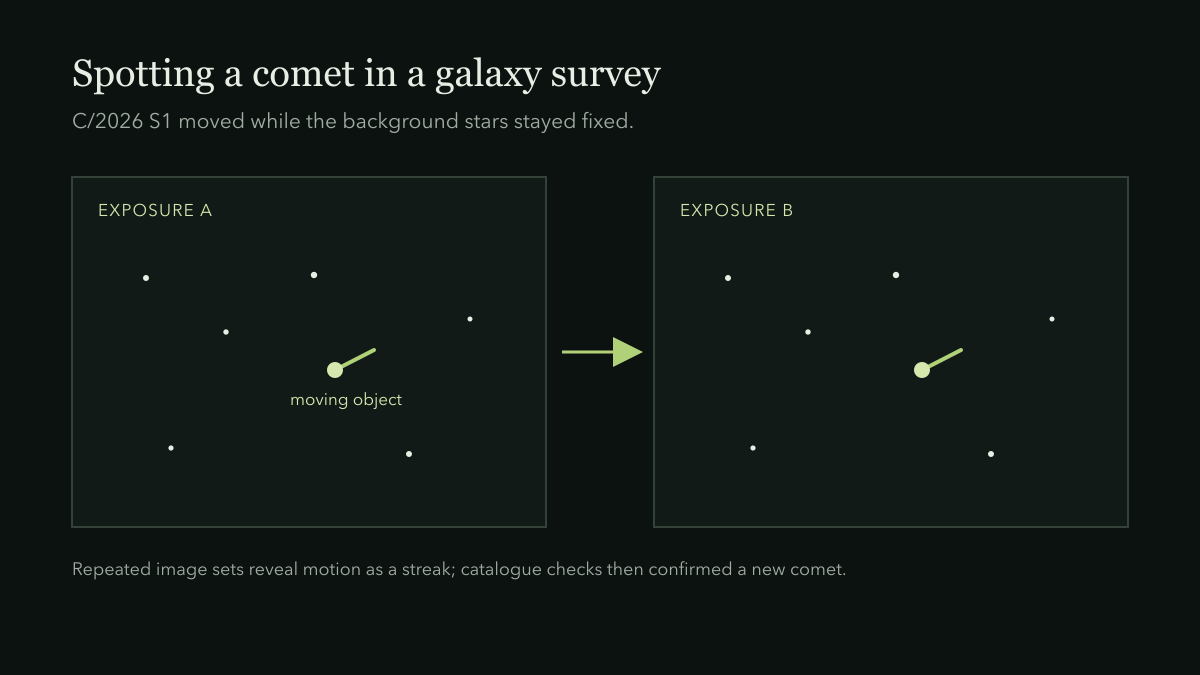
A radio signal traces comet MAPS before its breakup
Radio observations track April gas outbursts; the inferred mass loss depends on modelling assumptions.
Read story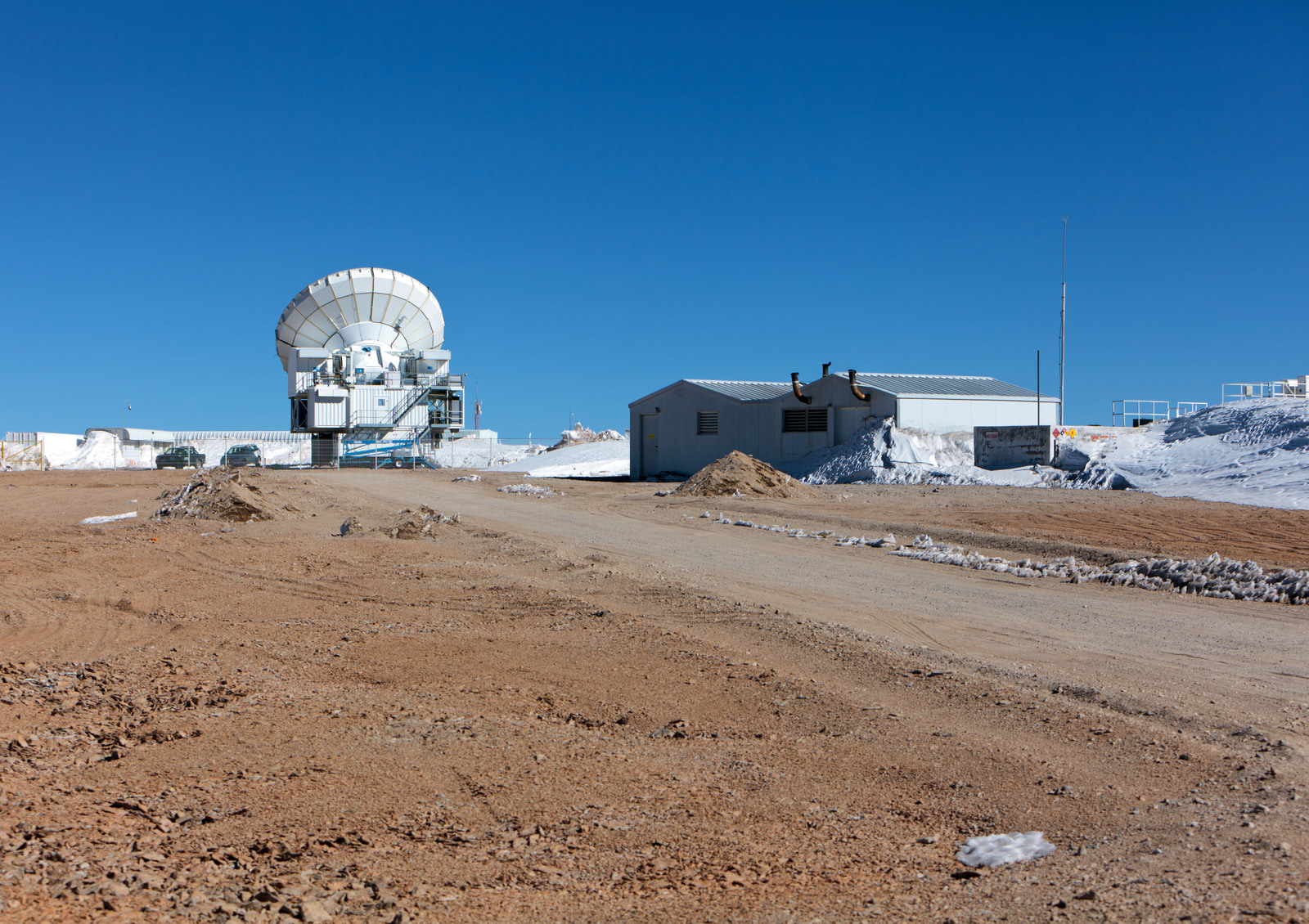
Why Chariklo’s rings need more than a Roche limit
A fluid model explores how a small body’s shape changes its disruption boundary, while leaving the origin and survival of its rings open.
Read story