Vega-C’s 2026 VV30 flight used a Vespa adapter for two satellite releases
Sentinel-3C rode above FLEX; the spacecraft separated in sequence, about an hour apart, into different orbits.
Article link
One fairing, two deployments
Vega-C flight VV30 lifted off from Europe’s Spaceport in French Guiana at 22:21 local time on 14 September 2026. It carried ESA’s FLEX and Copernicus Sentinel-3C together, marking the first dual launch for Vega-C.[2]
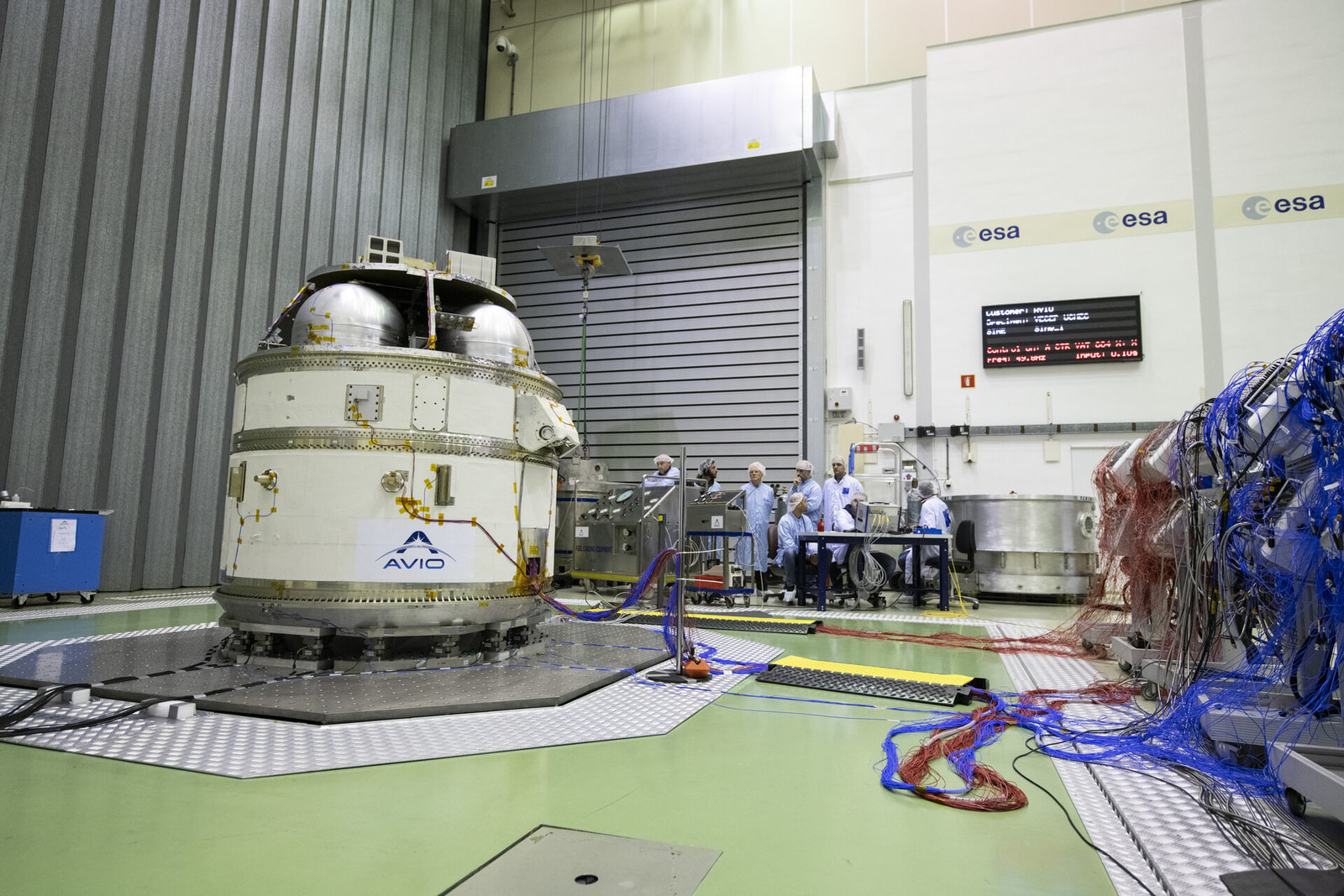
Vega-C climbs with three solid-propellant stages; a liquid-propellant fourth stage then places the satellites precisely. For VV30, the spacecraft were stacked inside the fairing using Vespa, a secondary payload adapter. Sentinel-3C sat on top, with FLEX enclosed below. After Sentinel-3C separated, Vespa opened to reveal FLEX for its own release. The adapter is payload hardware, not one of Vega-C’s propulsion stages.[2]
Release order and first contact
This was a sequenced separation, not one combined release. ESA reports Sentinel-3C was injected first, then FLEX about an hour later; the flight demonstrated that Vega-C could place the two missions into different required orbits. Once each satellite separated, ESA’s European Space Operations Centre received an initial signal from it, confirming safe release and contact with ground control. The arrangement joined one launch with two distinct deployment steps. This describes VV30’s demonstration, not every dual-launch profile.[1]
ESA planned several days of launch-and-early-orbit health checks after first contact. Satellite and instrument commissioning would prepare the missions for operations; the launch report did not declare that work complete.[1]
Sources & further reading
- FLEX and Sentinel-3C launchedEuropean Space AgencyPublished September 15, 2026Accessed November 3, 2026
Confirms the release order and interval, different required orbits, first signals and planned launch-and-early-orbit health checks.
- Vega-C VV30European Space AgencyPublished September 15, 2026Accessed November 3, 2026
Describes Vega-C’s three solid stages and liquid fourth stage, first dual launch, Vespa stack and release sequence.
Keep exploring
Vega-C’s 2024 return followed two Zefiro-40 nozzle tests
After a 2022 second-stage failure, Vega-C returned with a redesigned nozzle and two test firings behind it; its launch record now extends through 2026.
Read story
Ariane 6’s 2024 debut proved the upper stage—and exposed one unfinished test
The July 2024 maiden flight deployed eight passengers after two Vinci burns, but an auxiliary-unit shutdown prevented its planned final burn.
Read story