Vega-C’s 2024 return followed two Zefiro-40 nozzle tests
After a 2022 second-stage failure, Vega-C returned with a redesigned nozzle and two test firings behind it; its launch record now extends through 2026.
Article link

The failure pointed to a specific part
Vega-C’s return on 5 December 2024 followed a two-year grounding after flight VV22 was lost in December 2022. An independent enquiry traced the loss to progressive erosion of the carbon-carbon throat insert in the second-stage Zefiro-40 nozzle. The commission said a likely flaw in the material’s homogeneity contributed, and that the acceptance criteria had not established its flightworthiness. It found no weakness in Zefiro-40’s basic design. That distinction shaped the recovery: the task was to change and requalify a nozzle material and assembly, not declare the entire stage concept unsound.[1]
Before flight, the redesigned Zefiro-40 underwent two firing tests in 2024. The first, in May, used higher operating pressure and a shorter burn. The October test used lower pressure and ran longer. ESA reported that the initial post-test review found the new nozzle assembly and motor had performed as expected. The two conditions matter because a solid motor’s nozzle must withstand hot exhaust across the intended range of pressures and burn durations; one successful firing does not sample every operating condition.[2]
A successful return, followed by more flights
The return flight, VV25, placed the Copernicus Sentinel-1C satellite into a 700-kilometre sun-synchronous orbit. Arianespace reported spacecraft separation 1 hour and 43 minutes after liftoff. Ground firings exercised the motor under controlled conditions; VV25 then tested it inside the full launcher and mission sequence. That mission showed the repaired vehicle could complete a launch with a customer satellite, but it did not by itself establish long-term reliability.[3]
The later record gives that return more context. As checked on 3 November 2026, ESA’s launch list records five subsequent Vega-C flights: VV26, VV27, VV28, VV29 and VV30, with VV30 lifting off on 14 September 2026. A launch log shows that service resumed and continued; it does not supply a complete reliability analysis. For readers, the engineering takeaway is the chain from failure investigation to material change, test conditions and a flight that returned the launcher to operations.[4]
Sources & further reading
- Loss of flight VV22: Independent Enquiry Commission announces conclusionsEuropean Space AgencyPublished March 3, 2023Accessed November 3, 2026
Independent commission findings on the December 2022 loss, Zefiro 40 nozzle throat erosion and material-acceptance weakness.
- Last rocket motor firing clears path for Vega-C launchEuropean Space AgencyPublished October 3, 2024Accessed November 3, 2026
Reports the redesigned second-stage Zefiro-40 nozzle, the May and October 2024 firings under differing pressure and burn-duration conditions, and initial post-test findings.
- Arianespace Successfully Launches Sentinel-1C Earth Observation Satellite For European Union’s Copernicus ProgramArianespacePublished December 5, 2024Accessed November 3, 2026
Confirms VV25’s return-to-flight, Sentinel-1C insertion into a 700 km sun-synchronous orbit and spacecraft separation 1 hour 43 minutes after liftoff.
- Launches from Europe’s Spaceport from 2012European Space AgencyAccessed November 3, 2026
Current ESA flight log records five Vega-C launches after VV25, through VV30 on 14 September 2026.
Keep exploring
Ariane 6’s 2024 debut proved the upper stage—and exposed one unfinished test
The July 2024 maiden flight deployed eight passengers after two Vinci burns, but an auxiliary-unit shutdown prevented its planned final burn.
Read story
Vega-C’s 2026 VV30 flight used a Vespa adapter for two satellite releases
Sentinel-3C rode above FLEX; the spacecraft separated in sequence, about an hour apart, into different orbits.
Read story
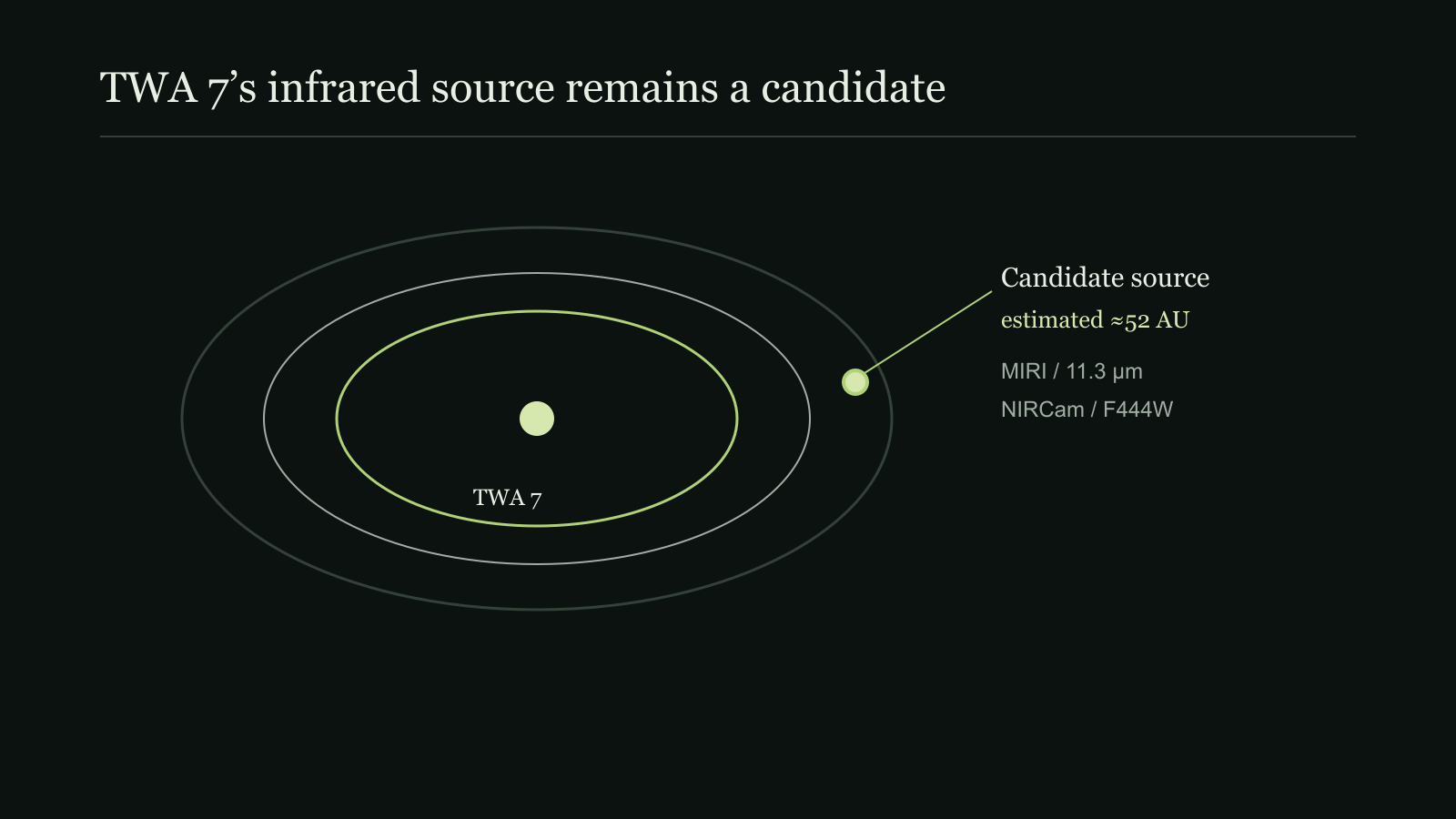
A 2025 study reported a planet candidate in TWA 7’s debris ring
A JWST source observed in 2024 fits a cool companion, while follow-up supports the interpretation without yet testing shared motion.
Read story