A 2026 CHEOPS highlight: AU Mic c’s transit timing reversed
Timings from 2024 moved AU Mic c back toward its predicted schedule; the size and cause of the variation remain uncertain.
Article link
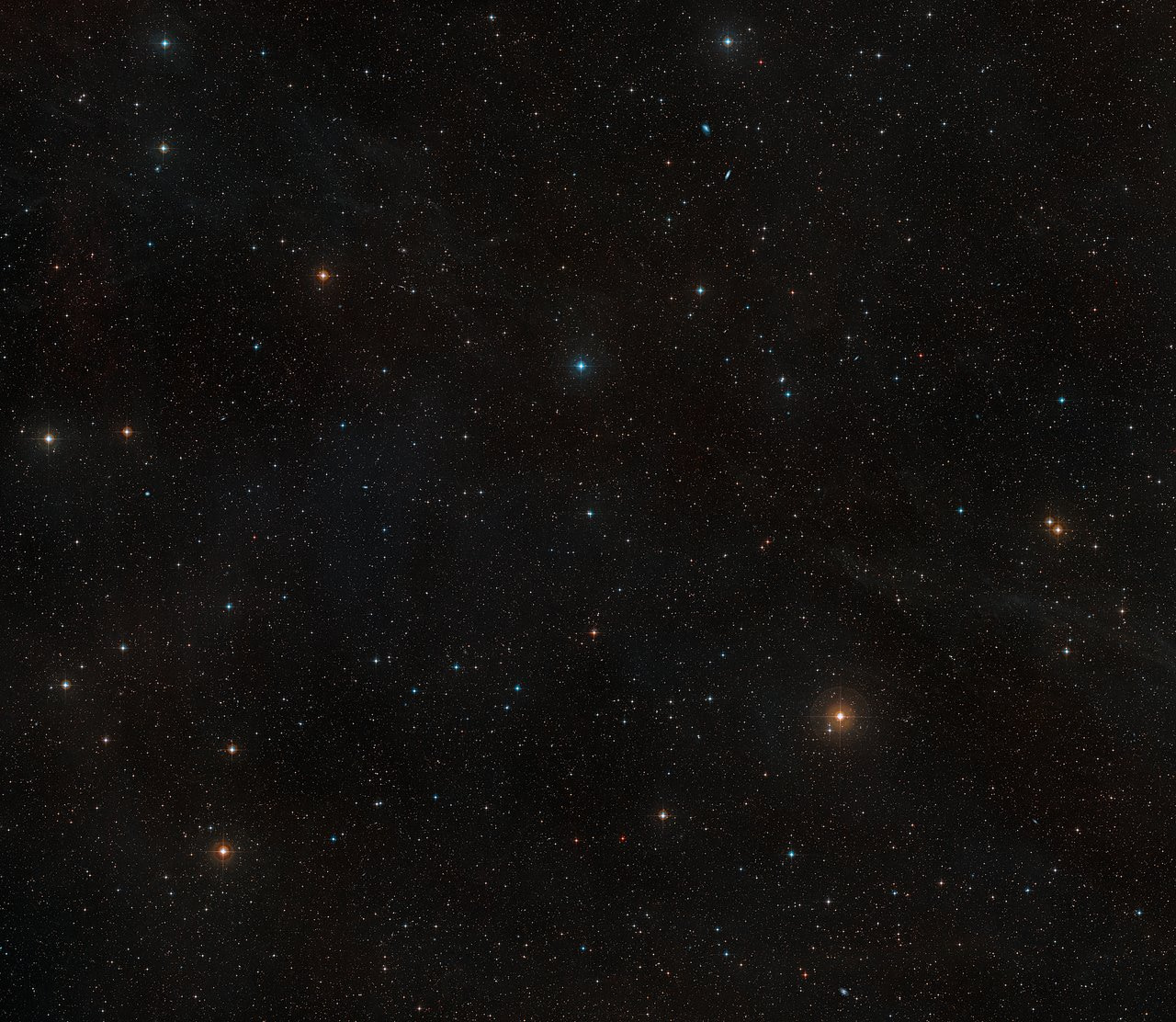
A changed transit schedule
The 2026 CHEOPS study of AU Mic’s 2024 observations found planet c’s transits moving toward the predicted schedule after late offsets in 2023.[1]
CHEOPS observes the small dip in starlight as a planet crosses its star, with frequent measurements that help locate the transit’s beginning, end, and midpoint. Comparing the midpoint with a predicted time can expose timing variations; ESA describes such changes as one way to detect the gravitational influence of another planet.[3]
From late to early
An earlier CHEOPS analysis of 2022–23 observations found AU Mic c arriving progressively later than predicted. It explored whether a third body could explain the pattern, but said the available timings could not establish a unique configuration. That was a proposed model, not a confirmed additional planet.[2]
On the updated schedule, two 2023 transits were about 49 and 57 minutes late; 2024 transits were roughly 38 to 8 minutes early. The tentative fit gave c an amplitude of 46 ± 26 minutes and a characteristic modulation timescale of 2,150 ± 110 days—not an orbital period or TTV superperiod.[1]
A timing pattern, not an explanation
The authors did not reanalyze the 2023 light curves; stellar activity, dynamics, transit-shape changes, coverage gaps, and systematics remain possible contributors.[1]
Further transit monitoring could test whether this reversal persists; its physical cause remains unresolved.[1]
Sources & further reading
- CHEOPS photometry from 2024 reveals a timing reversalGarai et al. / arXivPublished August 2, 2026Accessed November 3, 2026
Paper: 2024 timings, tentative fits, and possible causes.
- Transit-timing variations in AU Mic observed with CHEOPSGarai et al. / arXivPublished January 23, 2025Accessed November 3, 2026
Earlier paper: timing trend and uncertain third-body model.
- How to characterise an exoplanetEuropean Space AgencyAccessed November 3, 2026
ESA explains transit photometry and timing measurements.
Keep exploring
A 2025 study reported a planet candidate in TWA 7’s debris ring
A JWST source observed in 2024 fits a cool companion, while follow-up supports the interpretation without yet testing shared motion.
Read story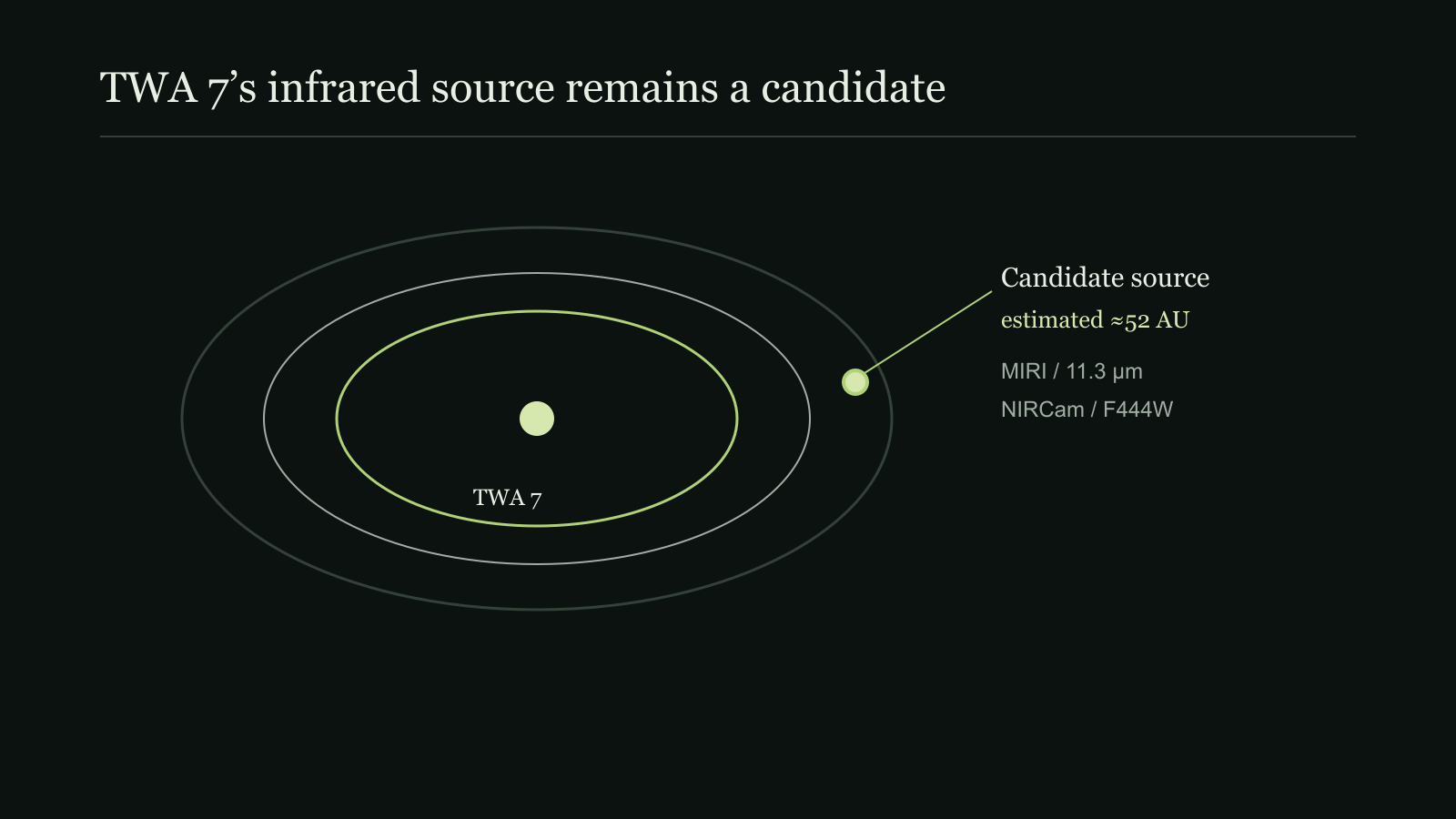
A 2024 study found a close planet around Barnard’s Star
ESPRESSO measured a short-period sub-Earth-mass world; later instruments tested the signal and refined which other signals count as planets.
Read story
TOI-4129 b at the Neptune ridge’s inner edge
A preprint reports confirmation of a 3.27-day planet using transits and stellar-wobble measurements.
Read story