How Ganymede’s magnetic field constrains its interior
A measured surface field filters interior models, but assumptions leave multiple core compositions possible.
Article link
The surface field is a model constraint
Ganymede’s measured equatorial surface field is about 719 nanotesla. The authors treat it as a constraint on models of the moon’s interior, asking which possibilities can generate a comparable field. It does not directly identify the core’s composition.[1]
Several interiors can fit
A dynamo sustains a magnetic field through motion in electrically conducting liquid. The models combine constraints on Ganymede’s mass and its distribution with a metallic core, rocky mantle and water-rich shell. Starting with a differentiated interior and molten core, they follow cooling and dynamo activity for 4.6 billion years. Different assumed shell densities allow different meteorite-like starting mixtures to fit.[2]
Why the answer remains uncertain
Those results depend on assumptions. The model gives the water-rich shell fixed densities rather than a full depth profile; high-pressure ice and ocean salinity could shift that profile. Its simplified one-dimensional mantle-convection treatment may move heat too efficiently, changing core cooling and dynamo timing. Iron-sulfur phase-diagram choices affect whether iron snow forms or the core freezes from below. An uncertain attenuation factor also changes how modeled dynamo power maps to the surface field.[2]
A future test
The authors point to JUICE as a future test of the model predictions. For now, the 719-nanotesla field narrows possible interiors, but it does not identify Ganymede’s exact core composition or origin.[1]
Sources & further reading
- arXiv record and version historyarXivAccessed November 5, 2026
The record lists v1 submitted 3 Nov 2026 and an acceptance comment for Icarus; it does not show a journal publication date. The Nov 5 listing block is separate from the manuscript submission and from any observation date.
- Constraining Ganymede's Interior Structure and Bulk Composition from Its Present-Day Magnetic Field StrengtharXiv; original research by Jun Kimura, Ryohei Kawakami, Taro Matsuo and Sho SasakiAccessed November 5, 2026
The exact v1 manuscript was inspected in the prior source assessment. Its 3 Nov 2026 submission and Icarus-acceptance comment do not establish a journal publication date or version-of-record comparison.
Keep exploring
Juice's 2024 Moon-Earth assist
The double assist sent Juice toward Venus before later legs to Jupiter.
Read story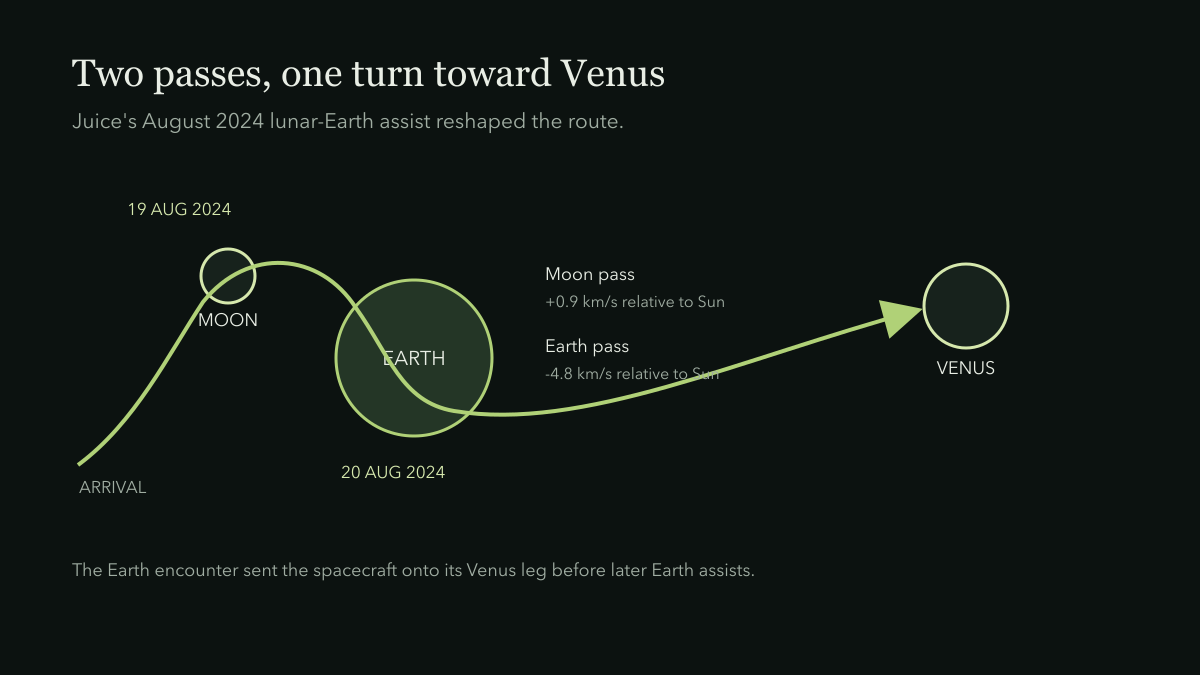
2024 highlight: polarized light maps magnetic clues near the Milky Way’s black hole
A 2024 polarization image revealed a robust spiral pattern, while the surrounding plasma and magnetic field still require interpretation.
Read story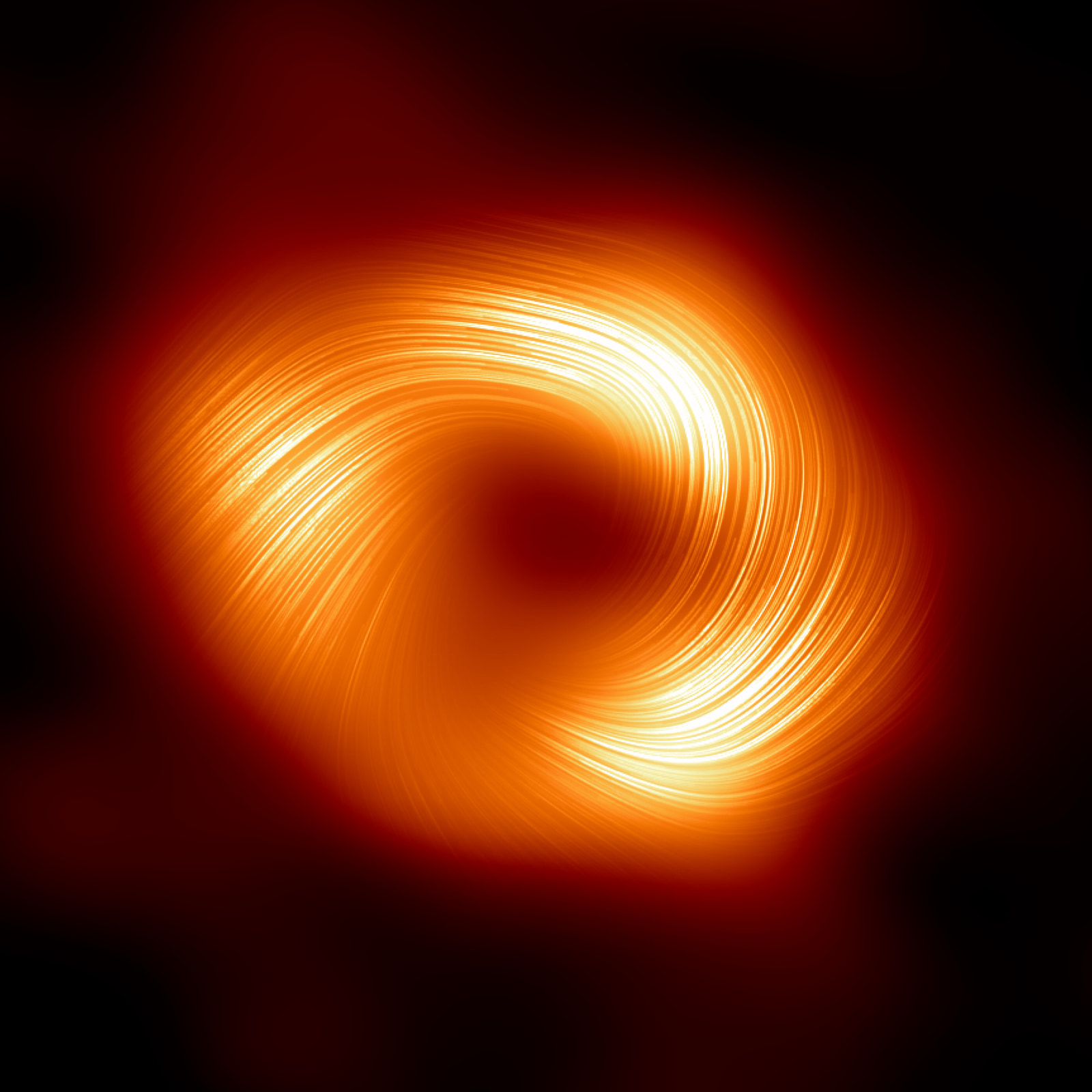
Uranus’s electron belt: what one flyby can tell us
A Voyager 2 reanalysis and an Earth comparison suggest one possible mechanism, but leave its cause unconfirmed.
Read story