What exoplanet spectra can and cannot show
Transit spectra suggest chemistry, but overlapping signals limit claims about atmospheres and life.
Article link
Reading a transit spectrum
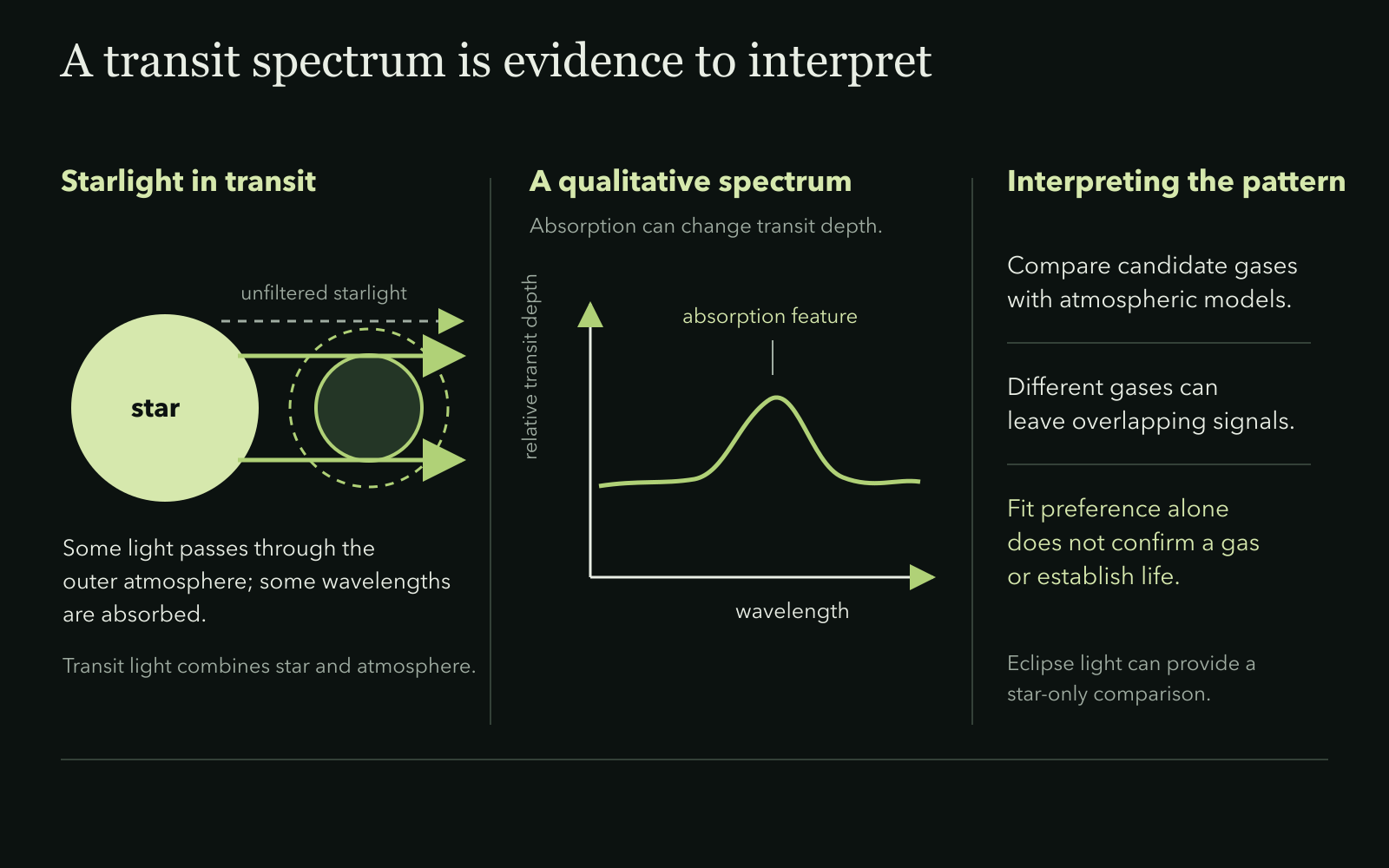
During a transit, some starlight filters through a planet’s atmosphere. Gases absorb particular wavelengths, changing the combined star-and-planet spectrum. Comparing it across wavelengths with a star-only eclipse measurement can help isolate the planet’s contribution. The spectrum is not a direct picture; it is light data that must be interpreted.[1]
Scientists compare observations with atmosphere models, which estimate how candidate gases change the light. A better statistical fit means that one tested model explains these data better than the alternatives in that comparison; overlapping signatures can leave multiple gases plausible.[2]
K2-18 b: chemistry, not life
A 2023 study of K2-18 b’s near-infrared JWST spectrum reported methane at 5-sigma significance and carbon dioxide at 3-sigma, while ammonia was not detected. The authors said this combination was consistent with a possible hydrogen-rich, Hycean atmosphere and discussed potential evidence for dimethyl sulfide (DMS). These are interpretations of spectra under models, not observations of an ocean or living organisms.[2]
A 2025 JWST MIRI analysis examined 6–12 μm observations. Its authors reported that retrievals including DMS and DMDS were favoured at roughly 2.9–3.2 sigma over a comparison model containing neither gas. The two molecules’ features were degenerate in this dataset, so the analysis did not distinguish which, if either, accounts for a candidate signal. The authors called for more observations and investigation of possible abiotic sources.[3]
An expanded model-space analysis of K2-18 b spectra found alternative atmospheres that could fit as well or better, showing that a relative preference depends on which models are tested. A candidate gas would still require confirmation and evaluation of non-biological chemistry; neither paper reports a detection of life.[4]
Sources & further reading
- Studying exoplanet atmospheres with ArielEuropean Space AgencyAccessed November 3, 2026
Standalone ESA method page explains wavelength-dependent transit absorption and comparison with a star-only eclipse spectrum.
- Carbon-bearing Molecules in a Possible Hycean AtmospherearXiv; original research later published in The Astrophysical Journal LettersPublished September 11, 2023Accessed November 3, 2026
Full author manuscript first posted 11 September 2023; reports model-based methane, carbon-dioxide and ammonia interpretations for K2-18 b.
- New Constraints on DMS and DMDS in the Atmosphere of K2-18 b from JWST MIRIarXiv (author manuscript)Published April 16, 2025Accessed November 3, 2026
First posted 16 April 2025; reports DMS/DMDS retrieval preference over a comparison model containing neither gas.
- Challenges in the detection of gases in exoplanet atmospheresarXiv (author manuscript)Published April 30, 2025Accessed November 3, 2026
Full author manuscript; expanded model comparisons show why relative fit preference alone does not establish a gas.
Keep exploring
Measuring stellar distances with parallax
Parallax links a star’s annual apparent shift to distance; noise and calibration determine confidence.
Read story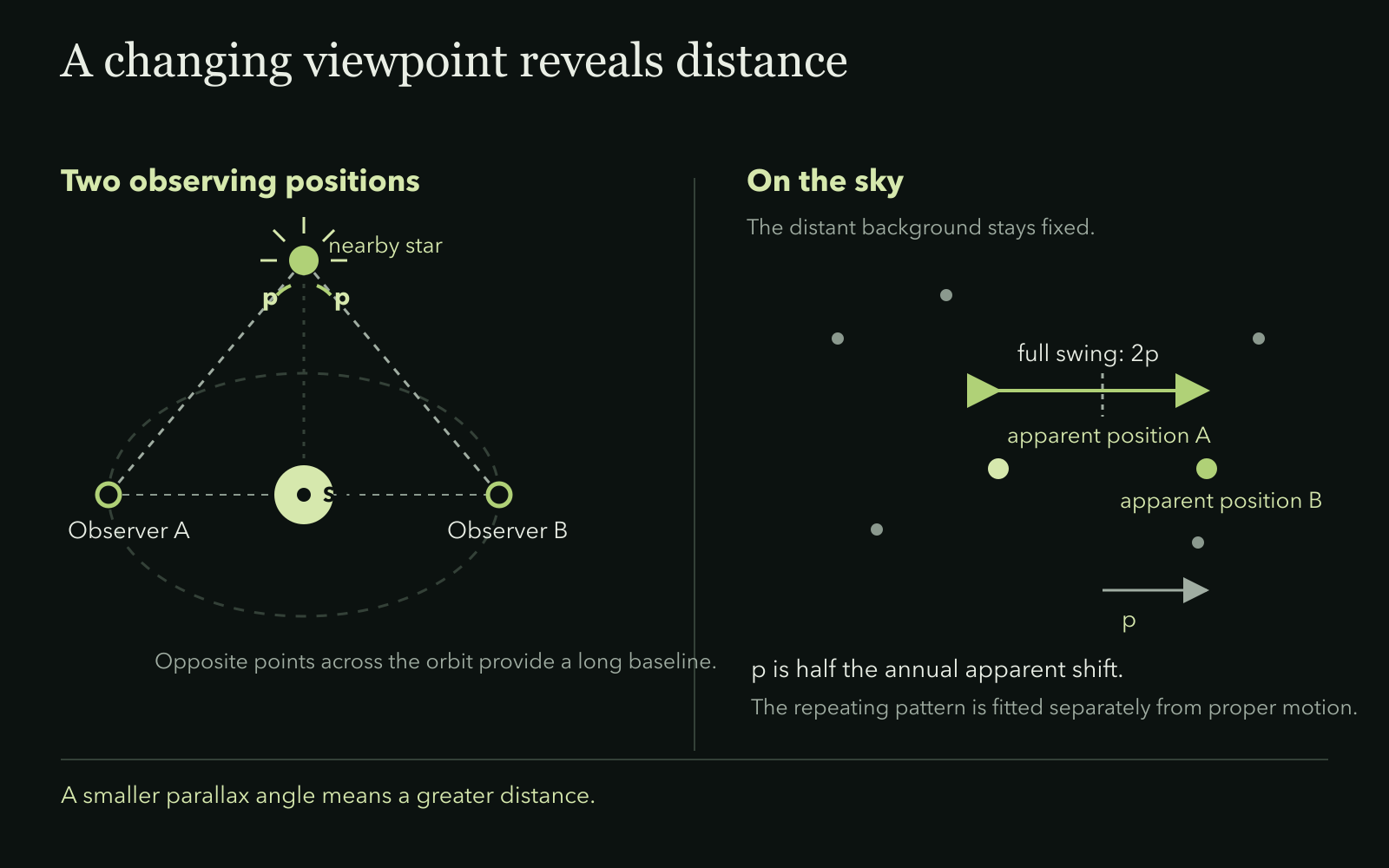
How gravity assists redirect spacecraft
A moving planet can trade a tiny amount of orbital energy when its gravity bends a spacecraft’s path.
Read story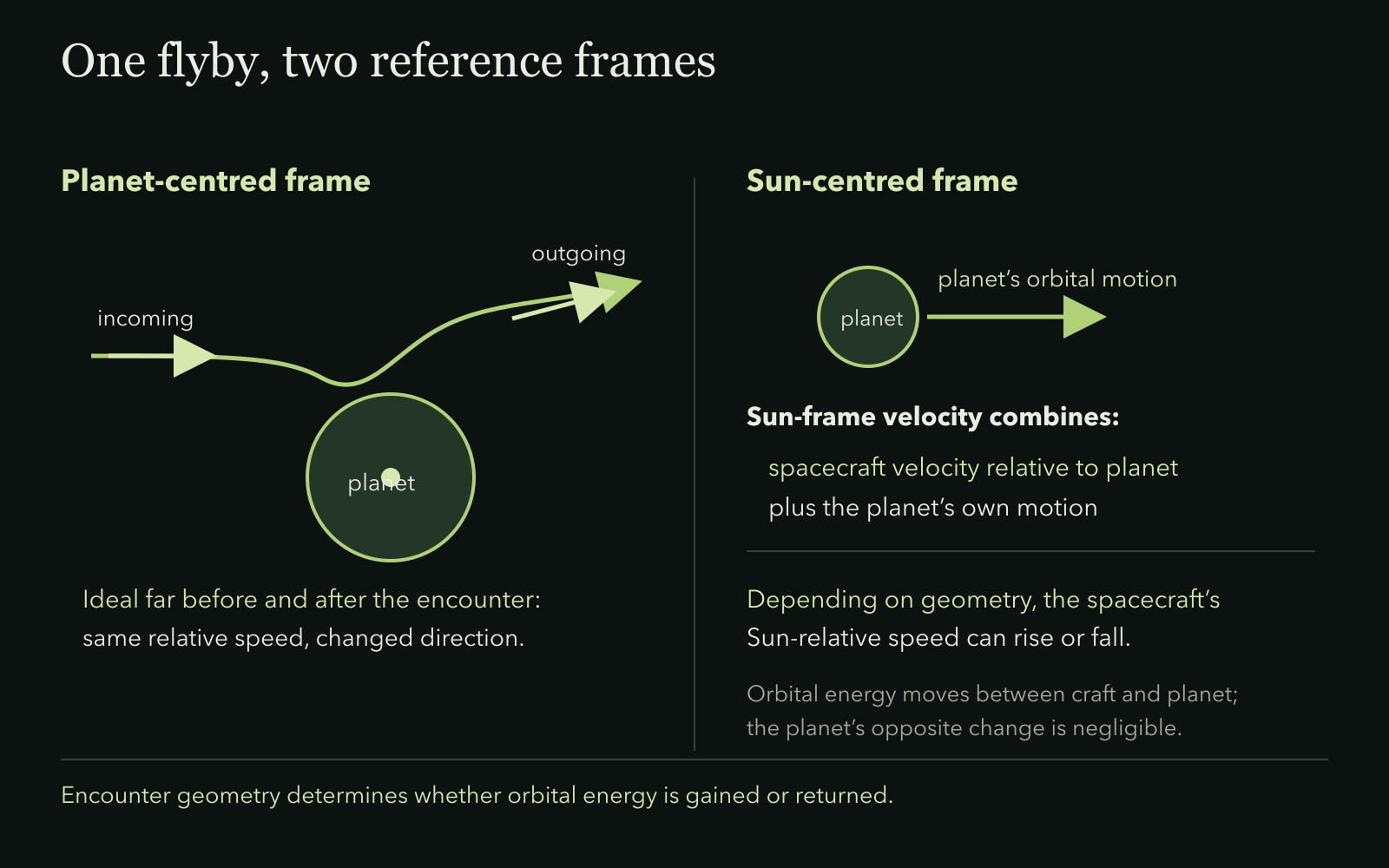
TOI-4129 b at the Neptune ridge’s inner edge
A preprint reports confirmation of a 3.27-day planet using transits and stellar-wobble measurements.
Read story