JWST measures a redshift beyond 10 for a galaxy candidate
An October 30 arXiv preprint reports CW-LRD-z10’s spectroscopic redshift; its classification and power source remain uncertain.
Article link
From photometry to spectrum
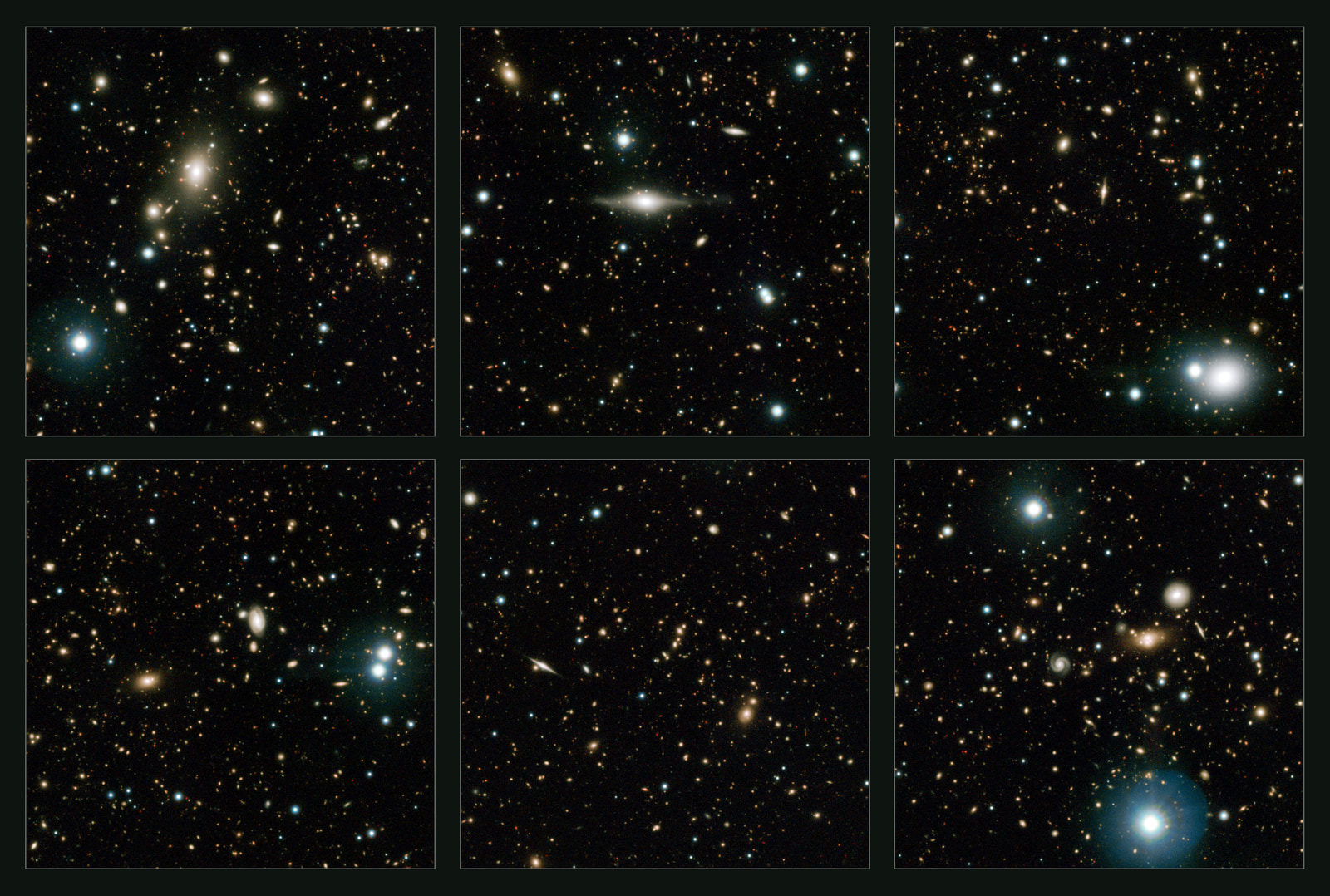
In 2025, a COSMOS-Web study selected CW-LRD-z10 from combined NIRCam and MIRI images, estimating a photometric redshift of 10.5 (+0.7/−0.6). Its authors said deeper spectroscopy was still needed to confirm the source’s redshift and nature.[2]
An arXiv v1 submitted on 30 October 2026 reports an EMBER-program JWST/NIRSpec spectrum. The authors’ best fit is z=10.361 (+0.003/−0.002), largely driven by tentative lines and the Lyman-alpha break. Masking other tentative-line regions while retaining Ly-alpha gives less precise, consistent estimates around z=10.3–10.4.[1]
Distance, label and engine
Redshift tracks cosmic expansion’s stretch of light; it does not identify the source. The authors call CW-LRD-z10 the first z>10 little red dot candidate with a spectroscopic redshift, but say its class remains uncertain: this spectrum does not cover Hα and Hβ. Detected lines are tentative (signal-to-noise 2–4); their ratios do not rule out star formation, and an obscured active galactic nucleus remains possible. The physical power source remains unresolved.[1]
Sources & further reading
- EMBER: A Little Red Dot Candidate at z_spec=10.36 in the Seed Black Hole EraarXiv; author manuscriptAccessed November 3, 2026
Manuscript submitted 30 October 2026; spectrum, model fits and classification limits.
- Discovery of a Little Red Dot candidate at z≳10 in COSMOS-Web based on MIRI-NIRCam selectionarXiv; author manuscript accepted in ApJ per recordAccessed November 3, 2026
Original imaging selection and redshift estimate; v2 revised 21 October 2025.
Keep exploring
Gaia22alz: a proposed trigger for nova winds
A model links Gaia22alz’s wind to its companion but cannot simulate the transition.
Read story
SN 2019qem’s modeled 9-solar-mass eruption
The fit places it two years before explosion; wind speed, gas shape and light production affect the estimate.
Read story
How laser guide stars help telescopes see sharply
Lasers make sodium beacons that help adaptive-optics systems measure atmospheric blur, while natural stars provide a reference for overall image motion.
Read story