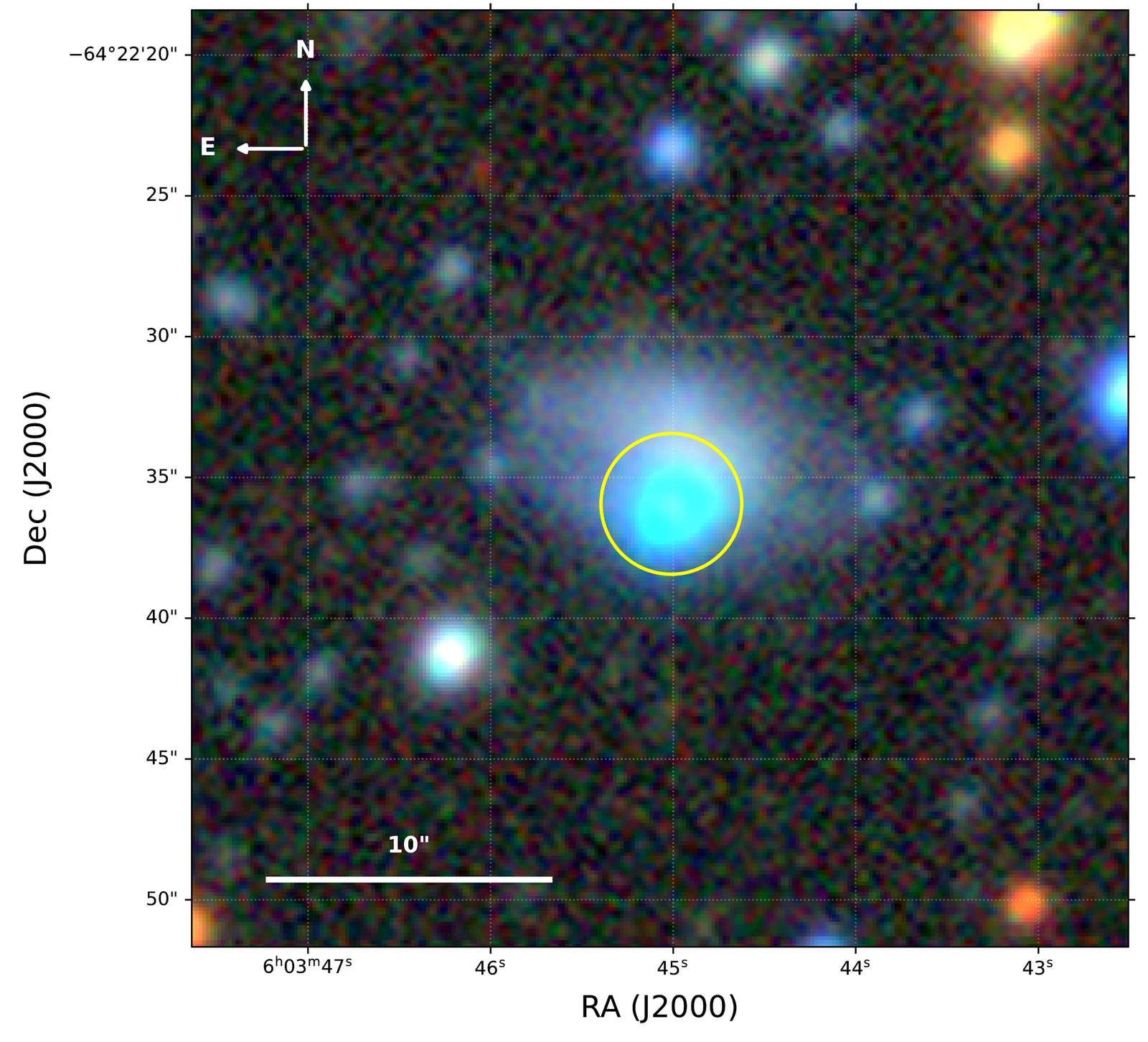
Gaia22alz: a proposed trigger for nova winds
A model links Gaia22alz’s wind to its companion but cannot simulate the transition.
Article link
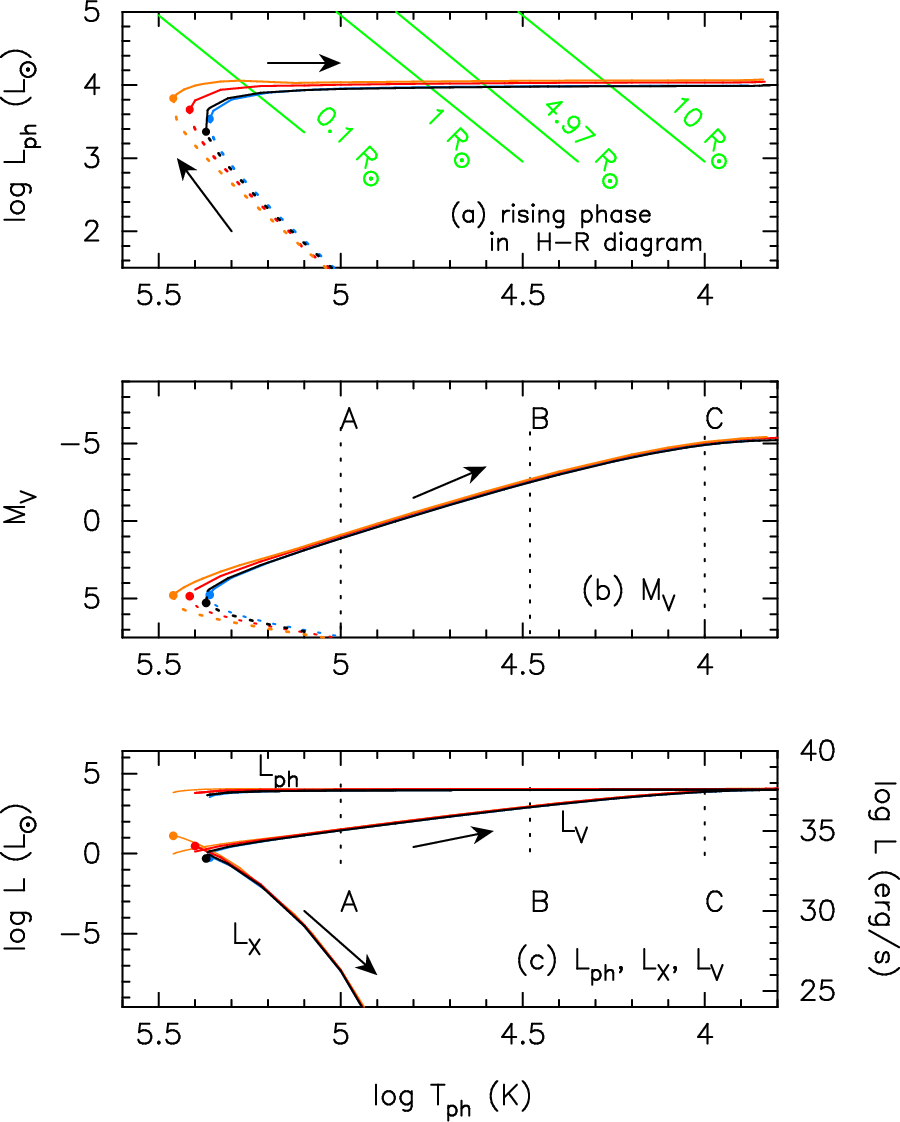
The observed shift
Gaia22alz (Nova Vel 2022) rose slowly, peaked several times, then declined. Later spectra showed signs of escaping gas; the paper compares it with three slow novae.[1]
A proposed trigger
The early model balances pressure and gravity in gas around a white dwarf. Authors propose the companion’s motion through it could disrupt the envelope and start an optically thick wind. Their calculation does not simulate the transition.[1]
What the model leaves open
The fit gives a white-dwarf mass near 0.6 solar masses. Mass and distance are model-derived; distance depends on assumed dust dimming. The companion trigger is a hypothesis, not an observed cause. The four cases cannot establish a mechanism for slow novae generally.[1]
Sources & further reading
- Metamorphic novae. I. Gaia22alz -- Violent relaxation starting from static evolutionKato & Hachisu / arXivPublished November 3, 2026Accessed November 4, 2026
Full text; model limits.
Keep exploring
Four spectral peaks point to two rings around a dead star
An unusual light spectrum supports a two-ring model around white dwarf J1328−1450, with alternatives still considered.
Read story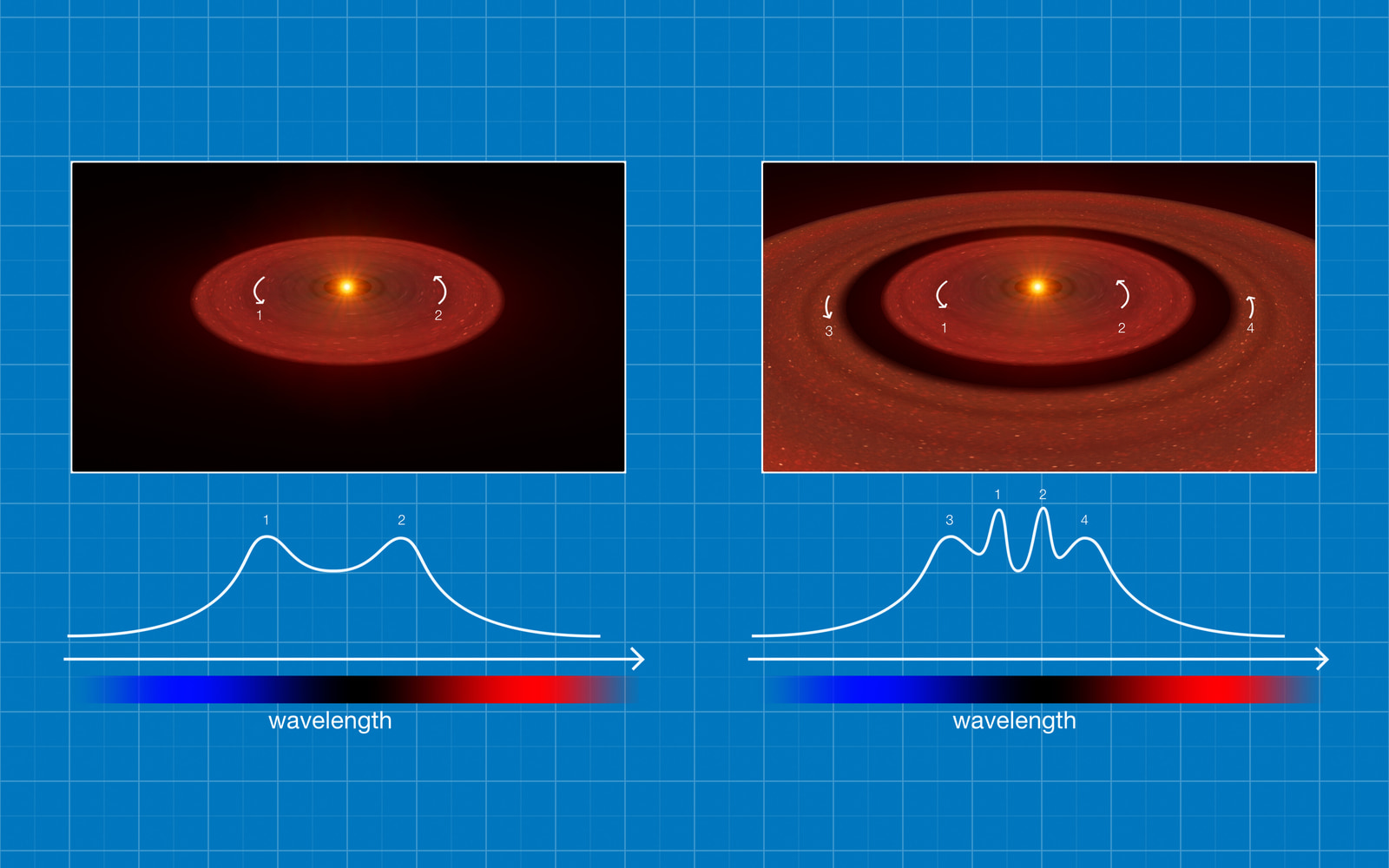
Gaia BH3: a black hole found by a star’s wobble
The 2024 announcement described a massive dark companion and a tentative clue from its star.
Read story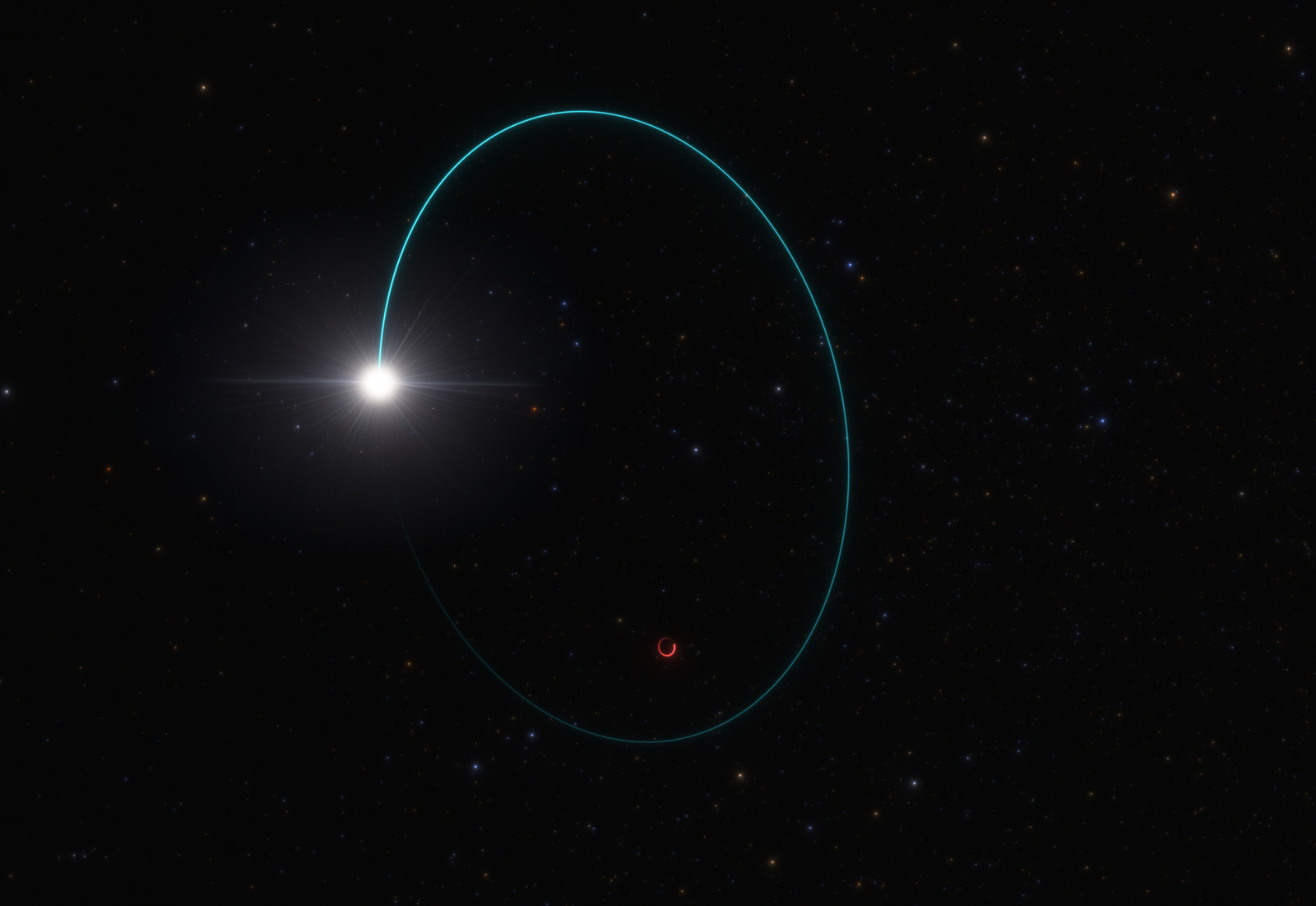
SN 2019qem’s modeled 9-solar-mass eruption
The fit places it two years before explosion; wind speed, gas shape and light production affect the estimate.
Read story