How might carbon move before rocky planets form?
A study of HOPS-68’s molecular spectrum proposes a route for moving carbon through a young disk.
Article link
What the spectrum shows
JWST’s MIRI instrument measured molecular absorption toward the young protostar HOPS-68. Fitting gas-layer models to the spectrum yields temperatures; spatial locations remain inferred.[1]
Warm hydrogen cyanide and acetylene, about 319–432 K and blueshifted (shifted to shorter wavelengths), are linked to a possible wind base. Cooler molecules near 40 K are associated with the outer disk, envelope or cavity; these locations are inferred, not mapped.[1]
A proposed route
The authors propose refractory (heat-resistant) carbon-bearing grains release gas in a 500–1,200 K inner zone. A wind could carry some outward, where ultraviolet chemistry may build longer chains. The zone itself is not mapped.[1]
Planetary context and limits
Earth is carbon-poor compared with primitive solar-system material. Li and colleagues’ 2021 solar-nebula model places the soot line near 500 K, where heat-resistant carbon carriers turn mainly into gas. The mechanism applies to material heated inside that boundary; the authors discuss other loss processes too.[2]
The HOPS paper studies one object and leaves wind carbon loss unquantified. Li and colleagues model the early Solar System; neither study establishes a direct connection between the HOPS-68 wind and Earth’s carbon deficit.[1][2]
Sources & further reading
- Up in smoke: carbon-destruction in the terrestrial planet-forming region of a young Class I diskarXiv (author manuscript, v2)Accessed November 5, 2026
Author manuscript v2, revised 4 November 2026; journal publication date unverified.
- Earth’s carbon deficit caused by early loss through irreversible sublimationScience Advances (primary article copy in NSF Public Access Repository)Published April 2, 2021Accessed November 5, 2026
Published 2 April 2021; full text checked in the NSF repository manuscript copy; publisher-version equivalence unverified.
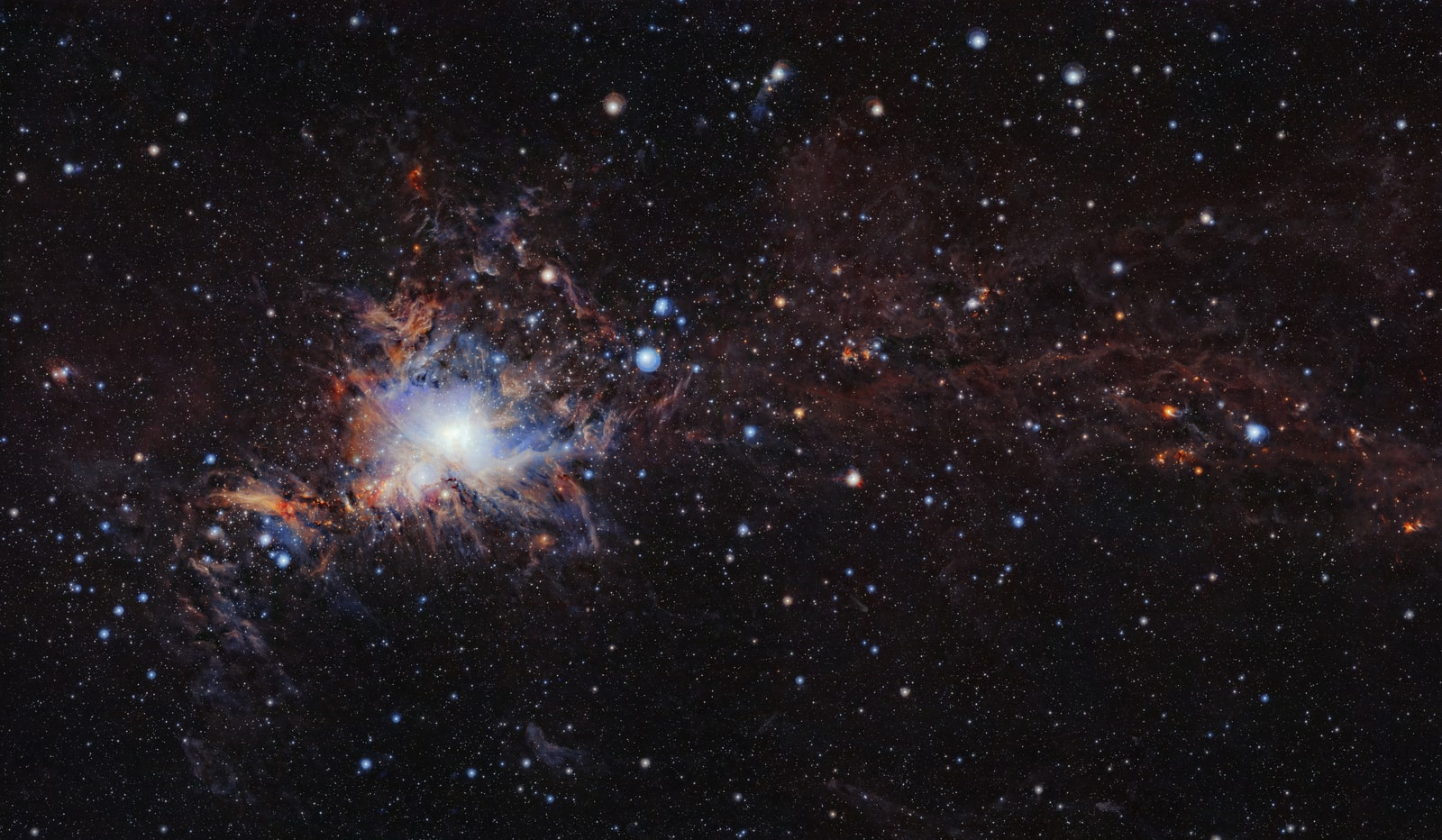
- The Orion a molecular cloud from VISTAEuropean Southern ObservatoryPublished January 4, 2017Accessed November 5, 2026
VISTA/VIRCAM near-infrared survey mosaic, released 4 January 2017.
Keep exploring
Gaia22alz: a proposed trigger for nova winds
A model links Gaia22alz’s wind to its companion but cannot simulate the transition.
Read story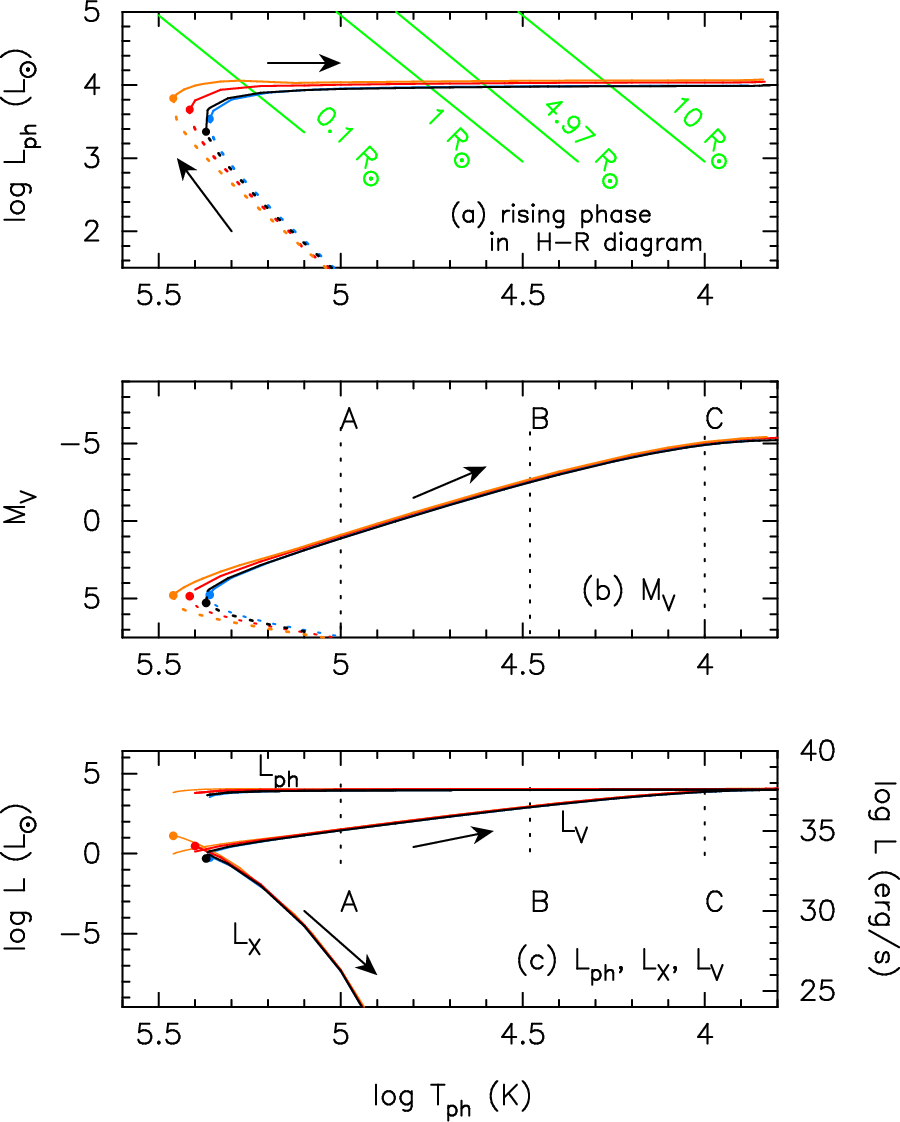
SN 2019qem’s modeled 9-solar-mass eruption
The fit places it two years before explosion; wind speed, gas shape and light production affect the estimate.
Read story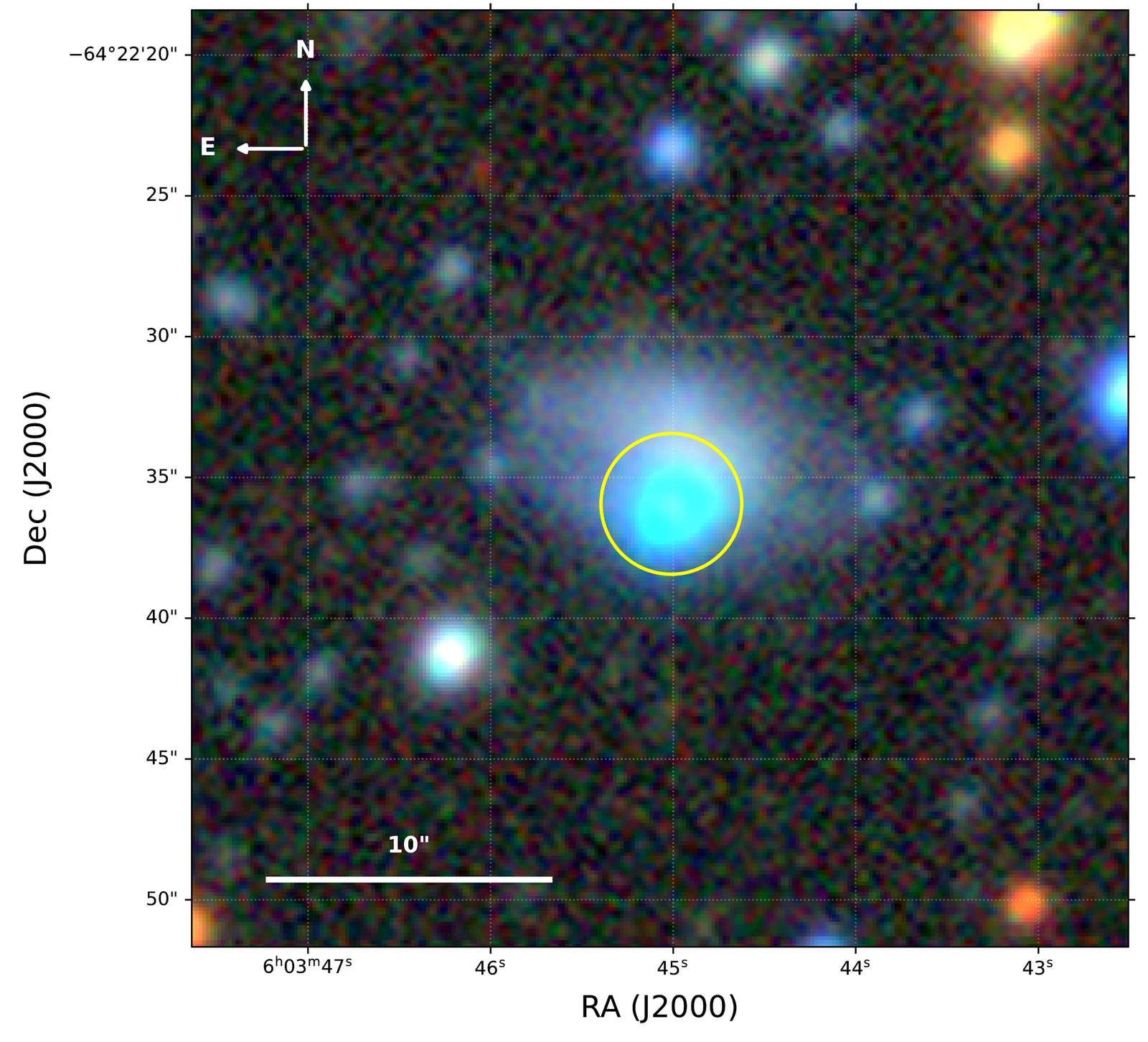
How laser guide stars help telescopes see sharply
Lasers make sodium beacons that help adaptive-optics systems measure atmospheric blur, while natural stars provide a reference for overall image motion.
Read story