Sentinel-1 observed Petermann Glacier’s August 2026 calving
A floating section over 76 km² detached after years of fracture growth; radar dates the event but does not assign its cause.
Article link
A 4 August break in northwest Greenland
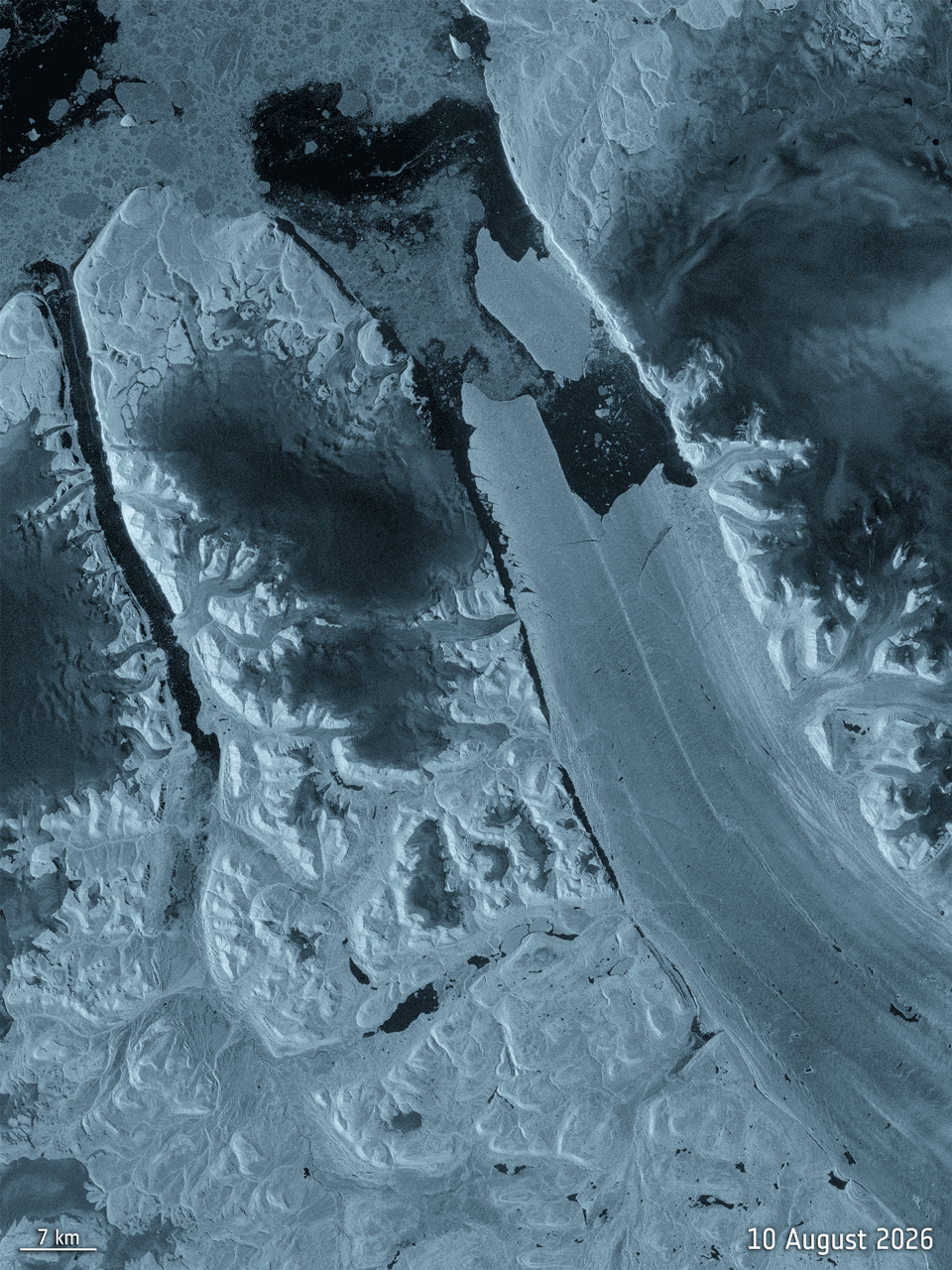
On 4 August 2026, a 76.4-square-kilometre section detached from Petermann Glacier’s floating ice tongue in northwest Greenland. Researchers estimated the tabular iceberg could be up to 150 metres thick.[2]
The team describes this as Petermann’s largest floating-ice loss since 2012 and the Arctic’s largest calving event since 2020.[2]
Arctic tabular icebergs are rarer than their Antarctic counterparts, the team noted. Following how these large ice masses form, drift and break apart can give researchers a closer look at changing polar ice systems.[2]
Radar tracks the ice tongue
Sentinel-1 is a radar mission designed for day-and-night, all-weather imaging, allowing observations through cloud and darkness in a remote polar region.[3]
Sentinel-1 images from 3 August showed deterioration along the ice tongue’s centreline; the next day, the section had detached east of the glacier.[2]
Separate April interferometric observations showed deformation and fractures before the August break. ESA says a one-day repeat sequence with Sentinel-1C during Sentinel-1D’s April commissioning phase measured fracture propagation and ice-tongue motion with ocean tides.[1]
The observation’s limits
Researchers had monitored Petermann since 2019, documenting fracture growth. ESA said the team would keep observing the glacier and detached ice island with satellite images, aerial observations and tracking data. The report records timing and extent, not a climate cause.[1]
The Canadian Ice Service was monitoring the iceberg for navigation and offshore safety. Large Arctic ice islands can drift for years before fragmenting into smaller, harder-to-track pieces.[2]
Sentinel-1A ended operations in June 2026 after 12 years, beyond its planned seven-year lifetime. ESA’s update described Sentinel-1C and Sentinel-1D working in tandem on opposite sides of Earth to optimise coverage and data delivery.[4]
Sources & further reading
- Sentinel-1 captures major ice loss from Greenland glacierEuropean Space AgencyPublished August 21, 2026Accessed November 3, 2026
Calving chronology, April radar observations and planned monitoring.
- Stirling scientists monitor Manhattan-sized glacier breakUniversity of StirlingPublished August 7, 2026Accessed November 3, 2026
Participating researchers’ measurements and long-term observations.
- Sentinel-1European Space AgencyAccessed November 3, 2026
Mission purpose, launch and observing capabilities.
- Time to say goodbye to Sentinel-1AEuropean Space AgencyPublished June 30, 2026Accessed November 3, 2026
June 2026 handover from Sentinel-1A to the 1C/1D tandem.
Keep exploring
Biomass launched in 2025 to map forest structure
P-band radar measures woody biomass as a carbon-storage proxy; repeated scenes will support estimates of forest height and stock change.
Read story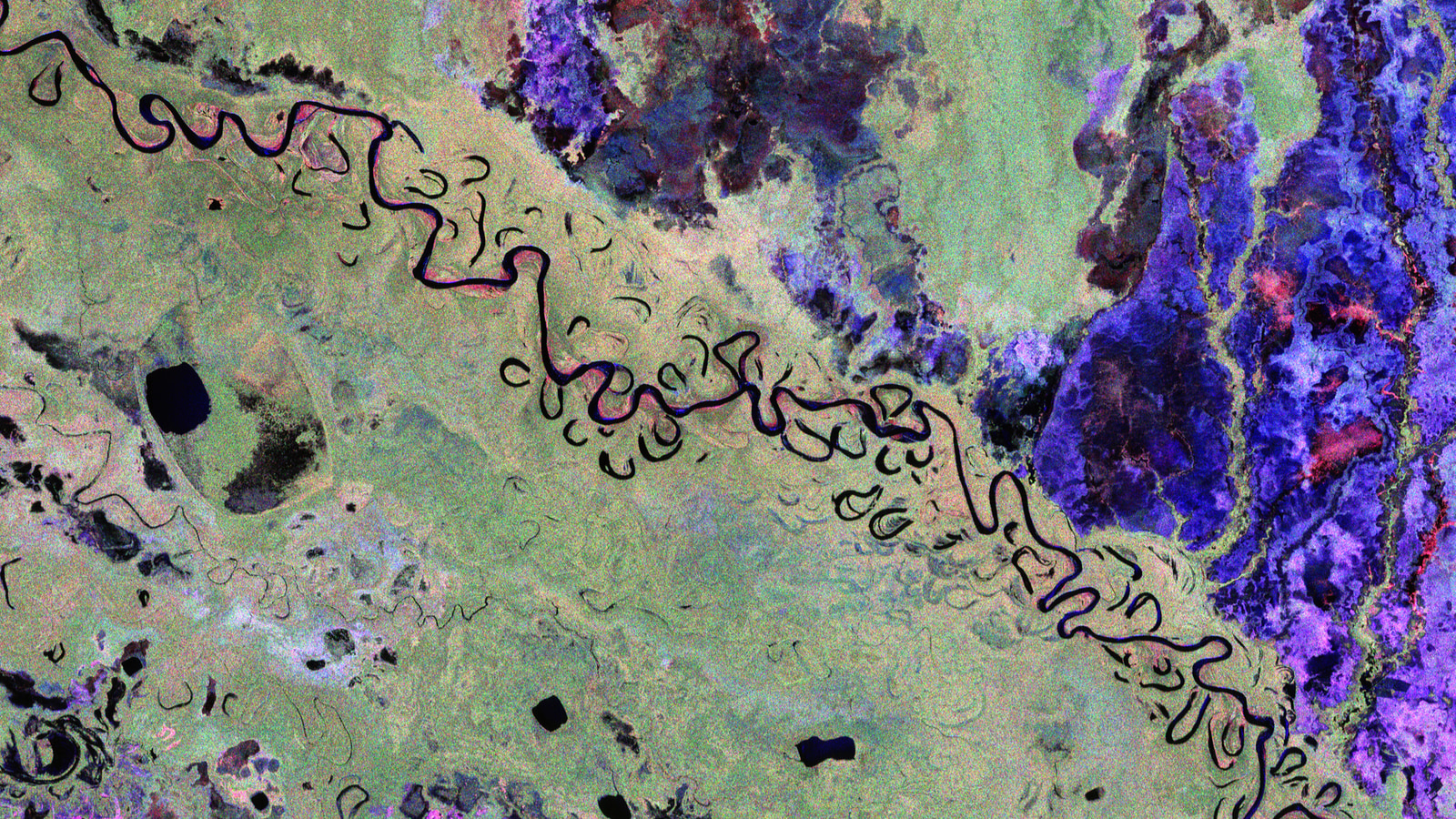
MetOp-SG-B1 moves to a cleanroom
MetOp-SG-B1 has left storage in French Guiana as ESA prepares for reactivation, checks, fuelling and a planned year-end launch.
Read story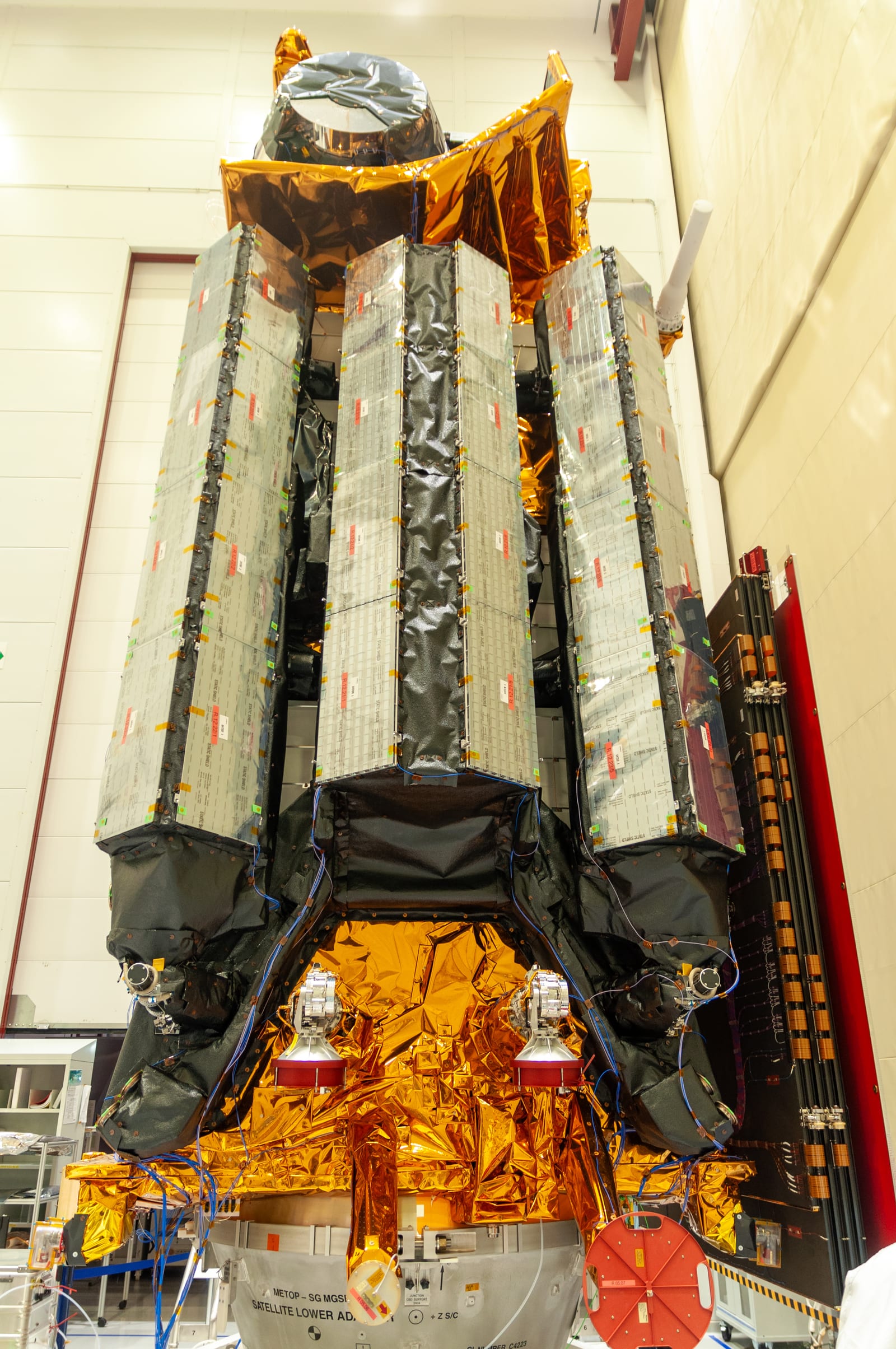
Sentinel-6B enters operational service
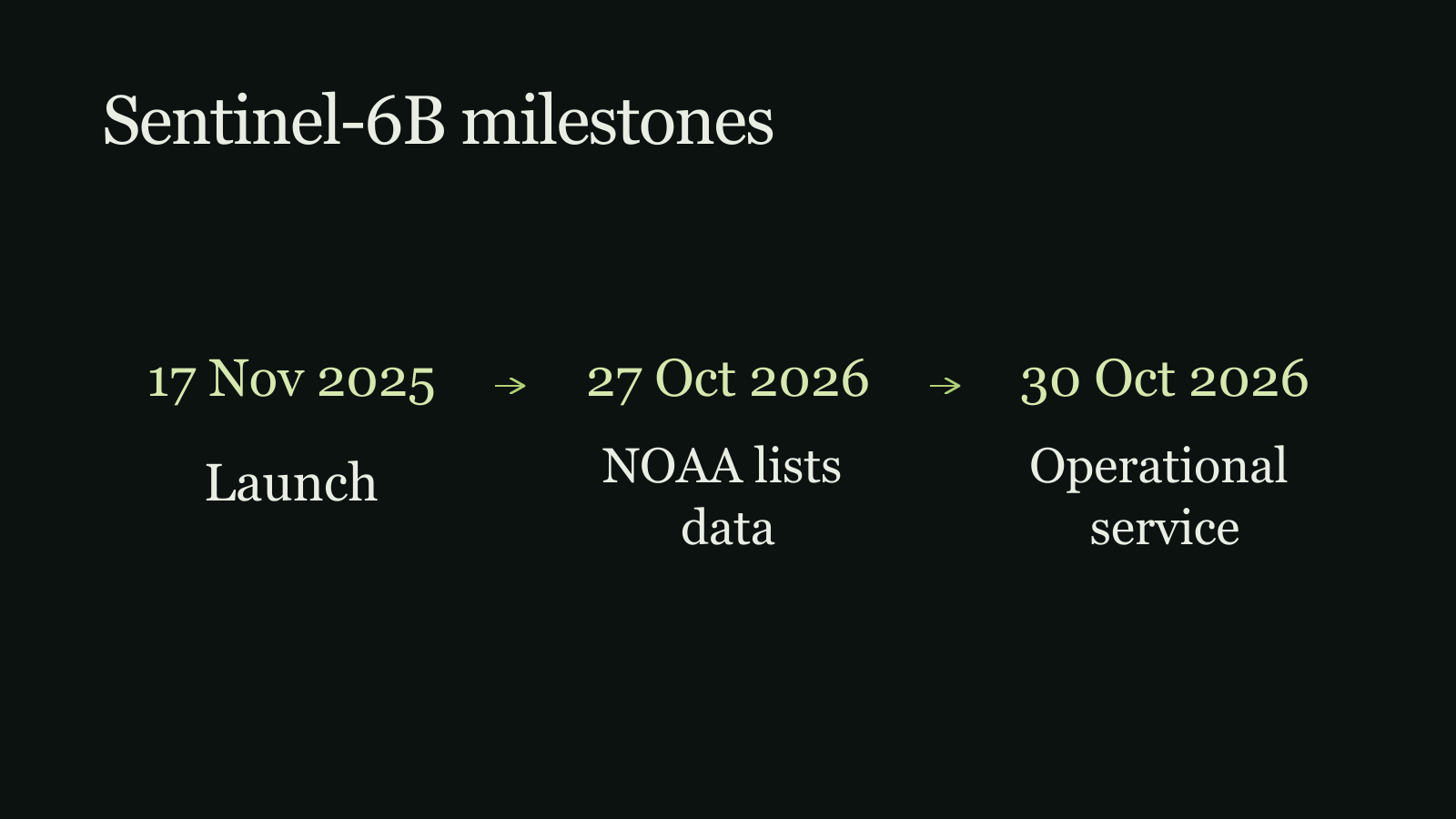
Sentinel-6B began operational service on 30 October after cross-validation with its twin. An earlier NOAA bulletin already listed its data.
Read story